
Driving intelligent manufacturing with robotics—how far has STEP come on its journey of digital twin exploration?
2021-02-19

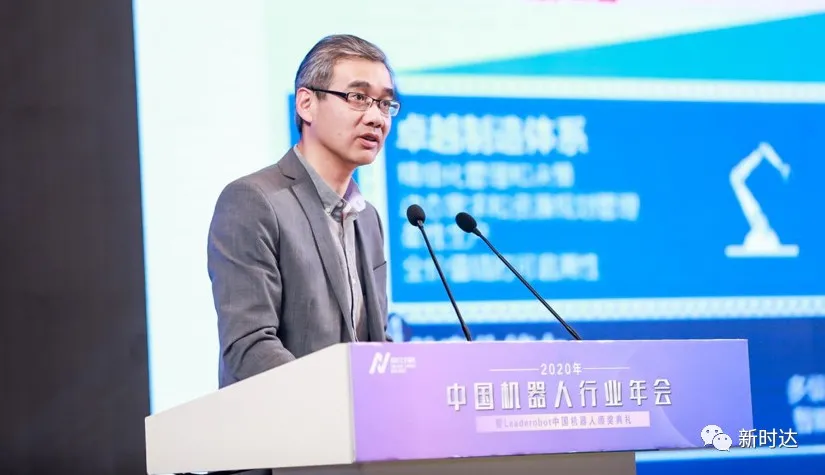
Cai Liang, Deputy General Manager of STEP
This article is compiled based on the speech delivered by Cai Liang, Deputy General Manager of STEP Da, at the China Robotics Annual Conference and provided by the Robotics Lecture Hall.
Robots are increasingly being integrated into intelligent manufacturing, and they have become the core of this advanced manufacturing approach. In the factories of the future, robots will take over all operations, so it’s crucial that robots themselves adapt to the evolving direction of intelligent manufacturing.
Digital twins have a tremendous impact on intelligent manufacturing. From the perspective of the development direction of intelligent manufacturing, under the overarching vision, digital twins—supported by three key pillars—namely, an outstanding manufacturing system, customer value across all scenarios, and innovative business models—as well as two fundamental enablers—digital capabilities and organizational capabilities—jointly constitute the core elements for the transformation and upgrading of China’s manufacturing industry.
Among these, the excellence manufacturing system is fundamental. The Excellence Manufacturing System encompasses refined management and decision-making, dynamic demand and supply planning and management, flexible production, and full-chain traceability. The customer value across all scenarios is primarily centered on the customer’s perspective, creating new value through personalized user experiences, digital product traceability, and new sales channels. Innovative business models refer to upstream-downstream collaboration, service-oriented manufacturing, C2B (consumer-to-business), and industrial chain platforms.
Digital capabilities are also crucial, encompassing a unified data governance system, a multi-tiered, collaboratively coordinated industrial internet architecture, a cloud-based service-oriented system platform, and an intelligent manufacturing technology platform. Organizational capabilities include a dedicated digital project implementation team, leadership and agile organizational structures, and a digital talent development program.
Full-value-chain development
Currently, robot integration is exhibiting three major trends: digitalization, informatization, and networking. Therefore, building a comprehensive value chain is critically important.
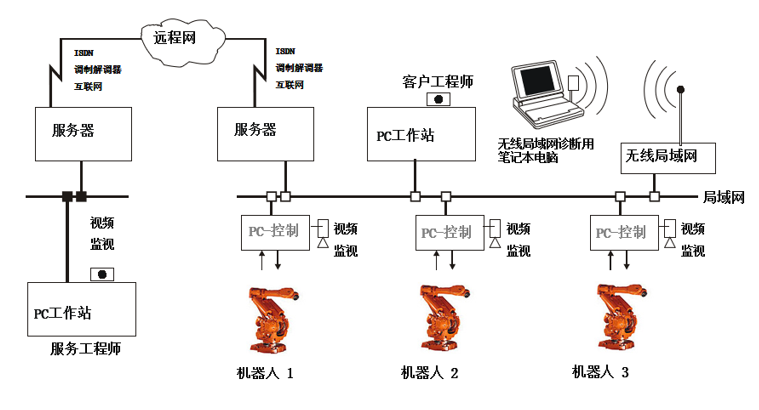
Simply put, the full-value-chain construction model refers to the process of manufacturing, order fulfillment, and delivery—from the manufacturing end. The order-delivery process and the order-acquisition process are entirely different from the traditional end-to-end manufacturing approach. At present, this represents a crucial stage in the transition from conventional manufacturing to intelligent manufacturing—and it’s a step that many companies are now actively working to implement.
So-called full-value-chain intelligent manufacturing is designed to respond to changes in production and manufacturing scenarios. The key conceptual shift lies in the fact that enterprises are no longer merely fulfilling production orders placed by other companies—rather, customer orders can now come directly from individual end users. From the perspective of the internet and e-commerce, consumers are actually the true end terminals. As the degree of internet-based informationization continues to rise, the efficiency and transparency of the entire production and manufacturing process are steadily improving. Consequently, in the future, work at the manufacturing end will often begin with consumer demand and ultimately evolve into a model where enterprise manufacturing directly connects and integrates with the end consumer.
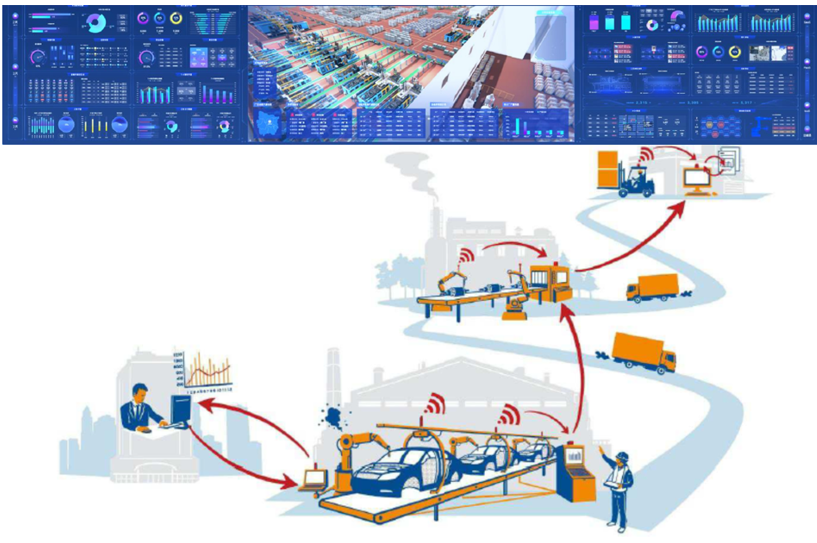
Therefore, the entire smart manufacturing sector and its ecosystem are set to undergo profound transformations in the future. Enterprises will need to consider customer value across all scenarios—encompassing personalized user experiences, digital product traceability, and diverse channels for reaching customers. Within the entire value chain, information flow and logistics undoubtedly stand out as the most critical factors. Simply put, the future of smart manufacturing is about seamlessly integrating the entire process—from raw materials all the way through to delivering the final product directly into the hands of consumers. However, under current conditions, although the information chain has already played a significant role, it still remains far from being fully streamlined and efficient.
Based on this idea, The business models of the future are bound to undergo tremendous changes. Cai Liang pointed out that Alibaba’s Rhino Platform concept, which has recently gained widespread attention, represents a thoroughly integrated M2N model. Under this manufacturing paradigm, the production side must consider how to align with changing demands and market dynamics. Moreover, the information systems, manufacturing systems, delivery systems, and financial systems all need to adapt swiftly to keep pace with these shifting demands. As smart manufacturing brings about evolving needs, enterprises face numerous challenges in building digital technologies. However, to meet these demands effectively, digital capabilities are fundamental—and this, in turn, calls for smoother information flows. Once any single link in the chain fails to function properly, the entire structure becomes nothing but a castle in the air.
In addition, the entire organizational model will also undergo changes. The overall organizational approach will focus on how to implement the M2N architectural framework and ensure a smooth transition toward intelligent manufacturing. Consequently, the corresponding supporting personnel capabilities, personnel deployment strategies, incentive models, and business models will all evolve as well.
Robots and Intelligent Manufacturing
Robots are a crucial component of intelligent manufacturing, and it has become a consensus that robots will eventually replace humans. Cai Liang believes that in 2020, under the impact of the pandemic, demand for robots surged dramatically, thereby firmly establishing the role of robots in smart manufacturing. However, it has now become clear that the shift from traditional manufacturing to smart manufacturing is not merely constrained by cost factors—as most people initially thought—but rather that the entire manufacturing model itself fundamentally cannot meet the demands posed by exceptional circumstances.
But Cai Liang also pointed out that, For robots to take over everything, they must advance their foundational technologies. Humans need intelligent robots—robots that, equipped with vision and tactile sensing, closely resemble humans in their ability to provide feedback on their surroundings. Once information flows into the robot through its communication channels, the robot can respond autonomously. Only then can it be considered an intelligent robot.
“Does having robots necessarily mean that the entire smart manufacturing landscape is undergoing a transformation? Not necessarily,” said Cai Liang. “After all, the flow of information isn’t as straightforward as just one person seeing it—there’s also the aggregation of information across the entire value chain. First, the information is aggregated, then it flows and is broken down into every stage of manufacturing. So, for robots to take full control, they need reliable sources of information and a comprehensive information infrastructure to support them.”
In the entire manufacturing process, there actually exists a fundamental model for intelligent manufacturing; however, how to integrate informationization, digitalization, and physical processes remains a significant challenge.
Starting from the design phase, through information flow, simulation, virtual implementation, and finally to delivery and realization—this approach calls for a comprehensive modular architecture that can further give rise to specialized subdomains. However, under this theoretical framework, there are still certain shortcomings. For instance, in actual manufacturing, numerous uncontrollable variations often occur. Moreover, models typically cover only the engineering stage up to the delivery stage; much work remains to be done in terms of how to build the very front-end architecture. As a result, most companies are still exploring and experimenting with this approach.
Application of Digital Twin Technology
Therefore, Cai Liang believes that the so-called digital twin technology is about integrating information technology and virtualization in a way that allows them to correspond directly to real-world scenarios, enabling a “what you see is what you get” approach to building smart manufacturing processes.
Cai Liang demonstrated, through a video, practical cases of how STEP deploys and structures factories in virtual environments. He argued that, by leveraging digital technologies, enterprises can simulate the operational performance of smart factories, achieving improvements in manufacturability, economic production efficiency, virtual commissioning, comprehensive logistics design for the entire plant, and real-time virtual-real integration of digital devices on-site. Furthermore, with full support from advanced physics engines for line-speed simulations, enterprises can enhance both design quality and design efficiency, ensuring greater precision in implementation.
Among these, virtual commissioning is an electrical commissioning technique based on digital simulation technology. By integrating the simulation environment with physical automation devices such as PLCs and HMIs, it enables the joint debugging of PLC programs and robot programs. This allows for early verification of designs and programs before actual construction begins, thereby reducing risk costs and improving project quality.
Virtual commissioning technology allows PLC code to be debugged in a virtual environment. By virtually simulating and validating automated equipment, it ensures that the equipment’s performance meets expectations. Afterward, downloading this code into the actual equipment can significantly shorten the on-site commissioning cycle.
While experimenting with these new digital twin technologies, STEP has also adopted 3D scanning technology to directly recreate the on-site environment. The 3D scanning tools serve as visual aids that can scan the existing physical space and then reconfigure the factory’s structural layout. Through reverse engineering, companies can digitally simulate and virtually replicate the intelligent factory architecture based on the original physical setup. By leveraging 3D modeling from the scanning center, STEP can construct a foundational 3D model, making the renovation of old factories far more efficient than relying solely on manual restoration and design.
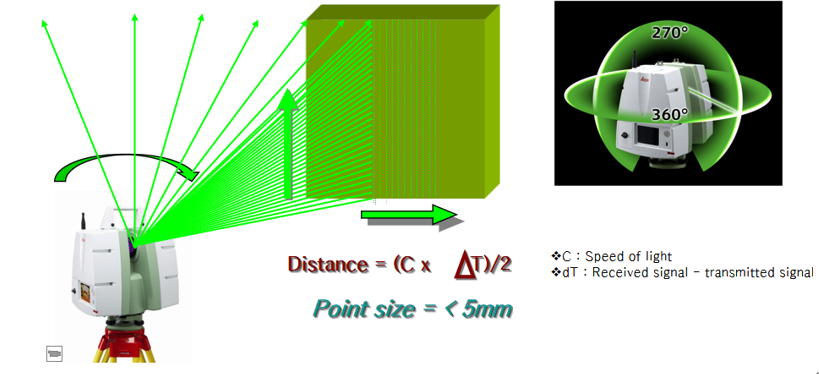
After 3D scanning, the entire factory structure can be re-architected into a virtual, intelligent factory model. “In the future, when designing factories, we’ll gradually adopt this approach—using 3D scanning and modeling to integrate equipment models directly into the design, thus achieving an intelligent factory design that closely mirrors the real-world scenario,” explained Cai Liang.
However, the completion of the design does not mark the end of the process. Under this model, STEP has also begun conducting virtual trial runs to verify whether the installation of each piece of equipment and component matches the actual conditions and meets the required specifications for trial operation. By carrying out work in a virtual debugging environment, STEP can also generate corresponding program code in the virtual setting, which can then be directly applied in real-world scenarios in the future.
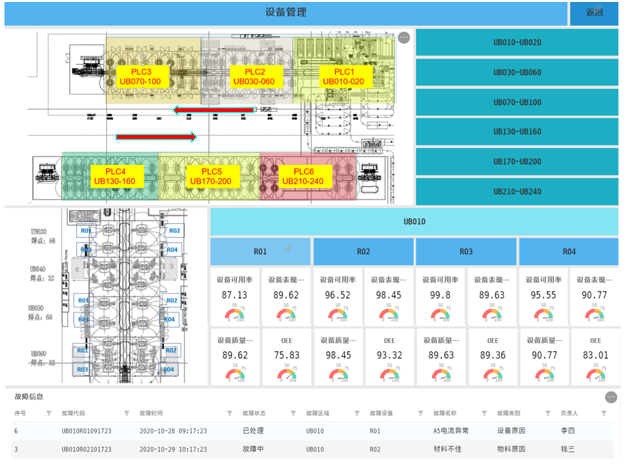
According to Cai Liang, STEP has now begun to gradually pilot virtualized design in small-scale projects and has achieved excellent practical results.
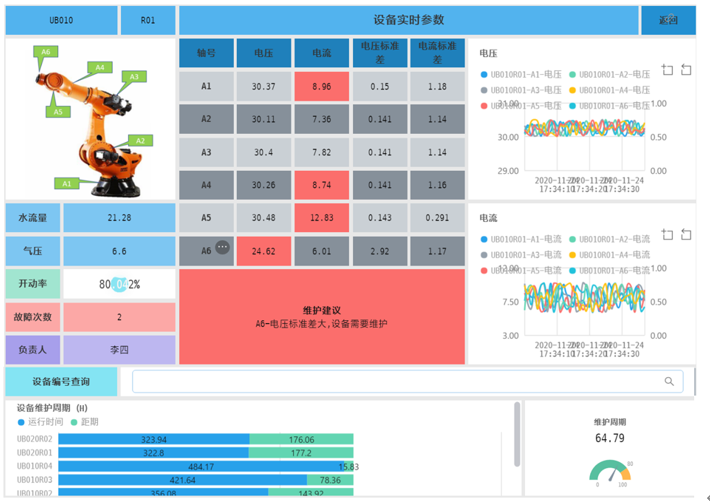
In the future, data aggregation will play an increasingly important role in the future maintenance and enhancement of equipment. Enterprises that focus on operational data will directly generate insights that drive data-driven improvements, serving as a solid foundation for more refined and targeted management of equipment.

Contact Us
Email:
market@stepelectric.com
Address:
No. 1560, Siyi Road, Jiading District, Shanghai Municipality