
The State Administration for Market Regulation has issued a document once again tightening the “safety string” for elevators. How can STEP Elevator Cloud provide precise support?
2023-04-23
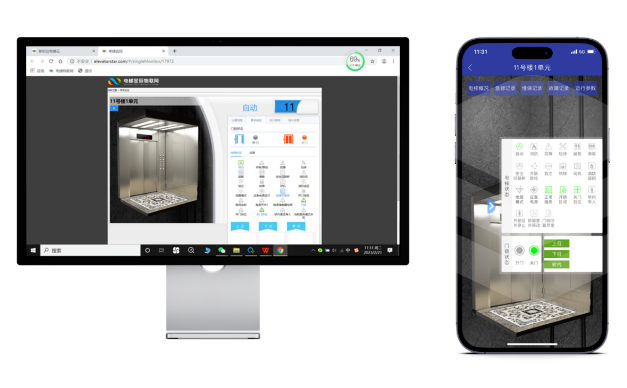
On April 4, 2023, the State Administration for Market Regulation issued Orders No. 73 and No. 74, promulgating the "Regulations on the Supervision and Administration of Special Equipment Manufacturers' Fulfillment of Their Main Responsibilities for Quality and Safety" and the "Regulations on the Supervision and Administration of Special Equipment Users' Fulfillment of Their Main Responsibilities for Usage Safety," respectively. These regulations clearly outline the safety-related main responsibilities of both elevator manufacturers and users.
STEP Elevator Cloud fully leverages its own control system advantages and integrates technologies such as elevator IoT and cloud computing to help elevator manufacturers and users confidently fulfill their safety responsibilities. In response to the requirements of the newly issued regulations—daily monitoring, weekly inspections, and monthly scheduling—it enables efficient, precise, and intelligent management, inspection, and scheduling.
Cloud Monitoring Function
1. Real-time transmission of electronic control data to monitor elevator status.
Through the elevator cloud monitoring function, the using unit can gain real-time access to data on elevator operation, malfunctions, alarm activations, abnormal vibrations, and other relevant metrics. When an elevator encounters a malfunction or poses a potential safety risk, the using unit will be notified immediately. Additionally, the using unit can retrieve historical data reports by time period, facilitating effective management, troubleshooting, monthly summaries, and the formulation of next-month plans. At the same time, this data can be synchronously shared with both the manufacturing unit and the maintenance and repair provider, establishing a rapid and efficient response system. For the manufacturing unit, this enables it to provide the using unit with necessary technical services quickly and efficiently, offering precise guidance and assistance in resolving quality and safety issues encountered during elevator operation.
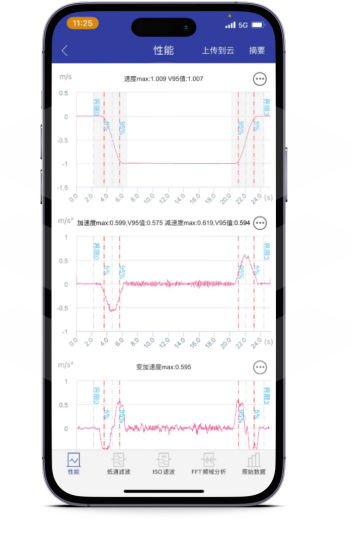
2. Upload vibration data to the cloud to promptly identify potential safety risks and hazards.
The integrated EOCD (Elevator Operation Characteristic Diagnostic Device) installed on the elevator car top, in conjunction with the elevator cloud terminal, enables vibration data to be uploaded to the cloud, where cloud computing directly reflects the mechanical performance. It can provide over-limit vibration alerts in both horizontal and vertical directions, compliant with GB/T 10058 requirements. By integrating electrical operating data and door-machine data, this system helps users, manufacturers, and maintenance providers promptly identify potential safety risks and hazards in elevators, facilitating the rapid development of appropriate response strategies.
Cloud service features
1. Big data collection and analysis to support intelligent troubleshooting.
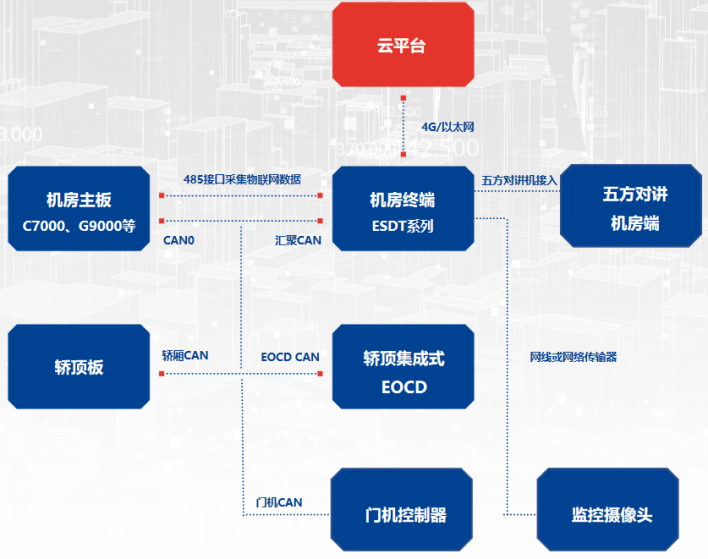
The ESDT series terminals in the machine room are equipped with integrated EOCD and door operator controllers, enabling large-scale data collection and analysis of electrical operating data, mechanical vibration data from the car cabin, door operator data, and audio-video data. This helps user organizations, manufacturing units, and maintenance providers obtain accurate and comprehensive elevator operational information in real time, thereby providing effective support for daily monitoring, weekly inspections, and monthly scheduling.
2. Migrate crane data to the cloud to enhance the depth of intelligent troubleshooting.
In conjunction with the STEP Sirius door operator, Elevator Cloud can effectively monitor door system failures—accounting for over 70% of all elevator malfunctions—and immediately issue alerts. The addition of door operator data enhances the depth of intelligent troubleshooting, enabling smart management and diagnostics specifically for door systems that are most likely to experience problems.
Cloud Guardian feature
1. AI-assisted monitoring for safe elevator use
ESDT terminals that support video can also be equipped with AI cameras to monitor and alert on conditions such as electric scooters entering elevators, passenger counts, whether people are present or absent, and doors remaining open for extended periods. By monitoring the behavior of elevator users, we can further reduce the likelihood of safety risks and hidden hazards. This provides stronger support for smart management and troubleshooting by the user organizations.
2. The emergency response process is automatically tracked and completed.
When an elevator malfunctions, the elevator cloud platform can automatically create an emergency response work order and send alert notifications to the relevant personnel. The emergency response process platform can automatically track the elevator’s status changes and automatically complete the process once the elevator is back to normal operation. Throughout this entire process, the elevator cloud platform provides full-process tracking and recording, making it easy to retrieve process data for troubleshooting and dispatching, ensuring accuracy and efficiency.
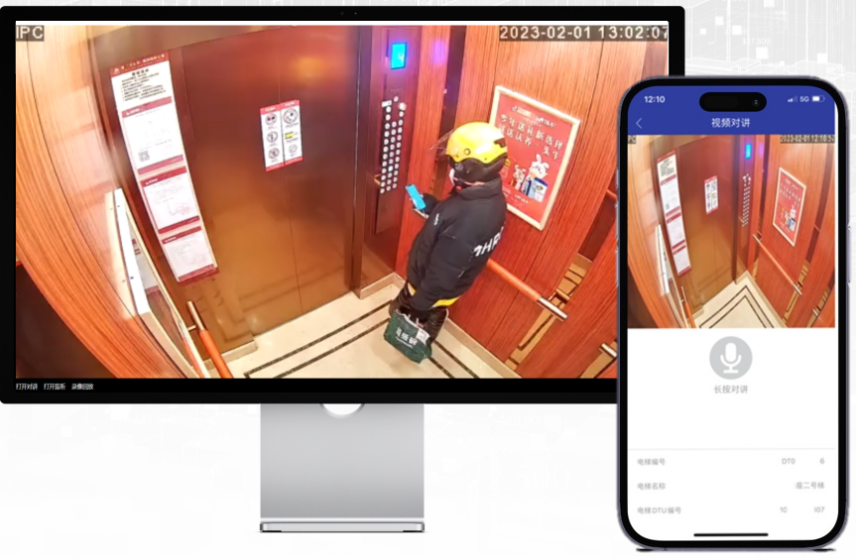
3. Audio-visual interactive services for emergency rescue
In the event of a trapped-person incident, the using organization can check the status of people inside the elevator car via the web portal or app, and establish a call connection with rescue personnel, enabling them to reassure the trapped individuals and develop a safe rescue strategy. The Elevator Cloud can automatically facilitate communication among the using organization, the manufacturer, and the maintenance provider. Once a trapped-person incident occurs, it allows multiple parties to intervene simultaneously and quickly organize rescue efforts.

Contact Us
Email:
market@stepelectric.com
Address:
No. 1560, Siyi Road, Jiading District, Shanghai Municipality