
In the age of AI already, do you still have so many worries when taking the elevator? (Part 4)
2024-10-12

In previous articles, we introduced how elevators leverage cutting-edge technologies to enhance operational efficiency, enable intelligent management, and achieve self-correction. In this issue, we’ll explore the mysterious technologies involved in elevator commissioning and safety monitoring processes.
01 “Guided Debugging” Technology
Elevator commissioning, as a critical step to ensure the safe operation of elevators, is also an essential part of construction projects. Once elevator parameters are set improperly, it could lead to abnormal operation or malfunctions, and even pose a threat to people’s lives and property safety.
The elevator commissioning process includes: inspecting the quality of elevator installation and collecting on-site measurement data, as well as verifying the correctness and reasonableness of electrical wiring and connections; conducting tests under various operating conditions with different loads; performing tests under normal operating conditions to cover a variety of operational states, including static safety protection and dynamic safety protection; and finally, addressing and rectifying any issues identified during previous testing phases to ensure that the elevator meets national and industry standards.
During elevator commissioning, a series of parameters—including elevator speed, load capacity, acceleration, deceleration, rated current/rated voltage of the traction machine, encoder pulse count, and door operation time—need to be configured.
So, The elevator commissioning process is typically complex and places high demands on commissioning engineers. 。
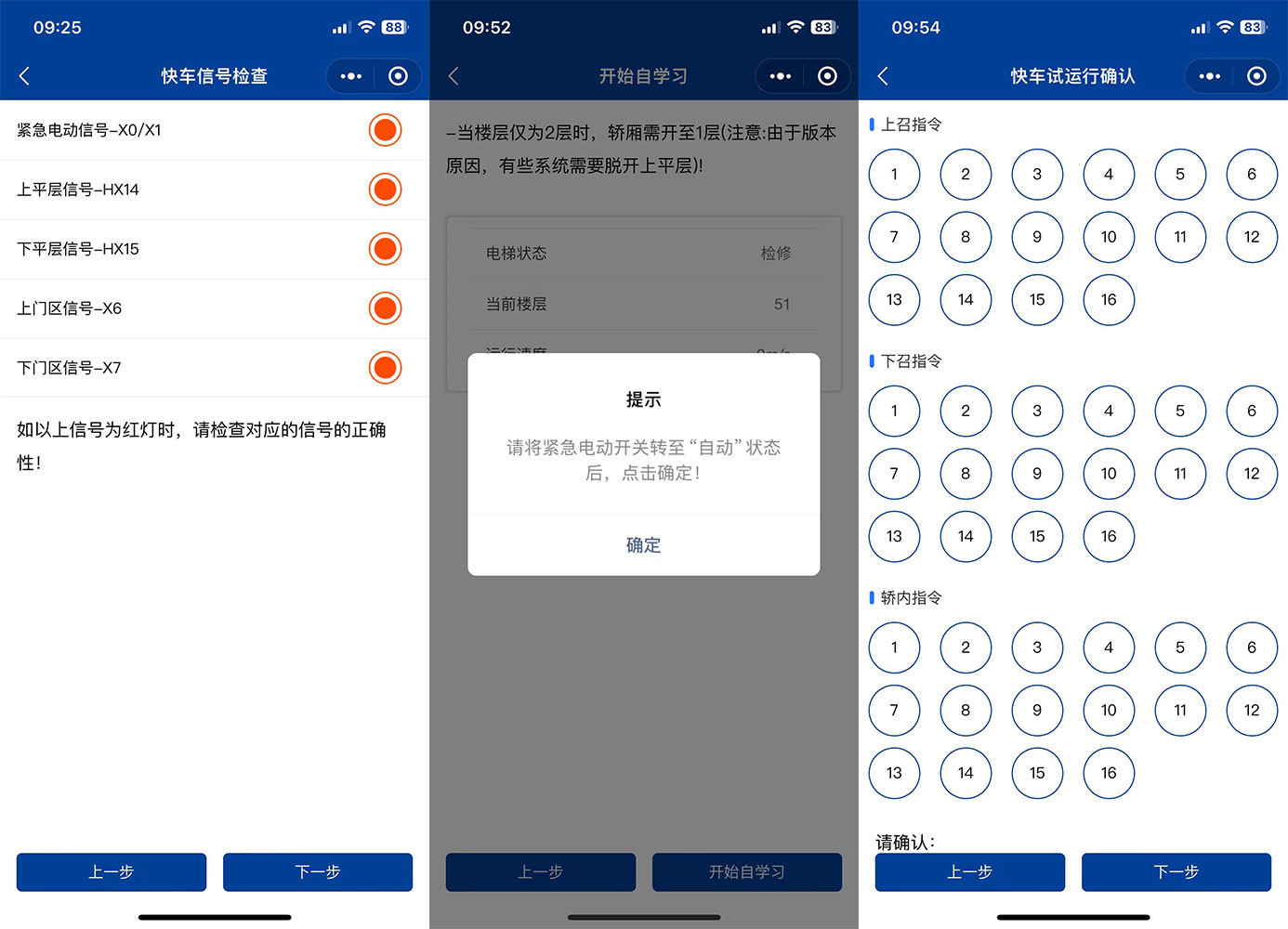
STEP has uniquely developed the “Guided Debugging” technology for elevator cloud systems. This technology simplifies the debugging process into several clear steps via a mini-program, with each step providing explicit guidance on the debugging tasks to be performed. Additionally, it provides real-time feedback on the debugger’s actions by displaying the elevator’s status dynamically.
02 Smart Leveling Fine-Tuning
The principle behind an elevator's ability to determine when it has reached a level landing is that the elevator's leveling sensors convert the car's displacement into optical signals. As the leveling sensor passes through the leveling plates installed on each floor, the elevator system determines whether it has reached a true level landing by detecting changes in the signals from the leveling sensors. Therefore, by adjusting the positions of the leveling plates, the elevator's leveling accuracy can be fine-tuned.
However, the space inside the elevator shaft is limited. During the adjustment of the leveling plate’s position, it’s essential to take into account the spatial relationship between the leveling plate and other elevator components, thereby avoiding damage to the light-shielding panel or its supports. Moreover, having a precise grasp of the correct installation position of the light-shielding panel further complicates the task of repositioning the panel.
The leveling micro-adjustment technology eliminates the cumbersome process of adjusting leveling plates. By simply setting a few parameters, you can independently adjust the elevator’s leveling position for a specific floor without affecting the leveling accuracy of other floors. Combined with car adjustment technology, you can conveniently fine-tune the leveling position right inside the elevator car—what you see is exactly what you get.
03 Intelligent Monitoring and Recognition
By installing various sensors and cameras in areas such as the elevator car, landing halls, and the top of the car, it is possible to monitor in real time the elevator’s operational status, user behavior, and surrounding environment. Using artificial intelligence technologies—such as image recognition—these data can be analyzed. When abnormal situations occur—for example, passengers attempting to force open elevator doors, electric bicycles entering the elevator, elderly individuals falling, or dangerous behaviors like people walking backward or leaning over the edge on escalators—the system can respond swiftly by automatically stopping the elevator or escalator, issuing an alarm, and promptly notifying the relevant personnel.
The following figure shows the detection of electric bicycles using a camera installed inside the elevator car. Once an electric bicycle is detected, the system can delay closing the doors and trigger an alarm via audio and visual signals.
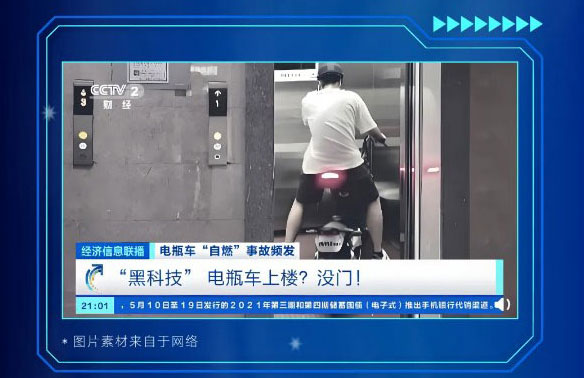
This intelligent safety monitoring system effectively enhances elevator safety and better safeguards the lives and property of passengers.
In addition, artificial intelligence technology can also provide more personalized services—for example, identifying user identities through facial recognition technology and recognizing customer commands via speech recognition technology. Such personalized services enhance the intelligence level of elevators and boost user satisfaction.

Contact Us
Email:
market@stepelectric.com
Address:
No. 1560, Siyi Road, Jiading District, Shanghai Municipality