
What are the working principle and function of a frequency converter?
2024-07-23

As a widely used power device, the inverter’s primary function is to convert the frequency of the input power supply into the desired output frequency. This frequency conversion enables precise control of the motor speed by adjusting the frequency, thereby achieving— Energy conservation and consumption reduction 、 Precisely adjust the rotational speed 、 Control torque 、 Reduce the impact at startup and Protect mechanical equipment for multiple purposes. Among numerous industries, variable frequency drives play an indispensable role—particularly in transportation systems, manufacturing production lines, energy management systems, and mining and quarrying operations. The application of VFDs is not only extensive but also critical.
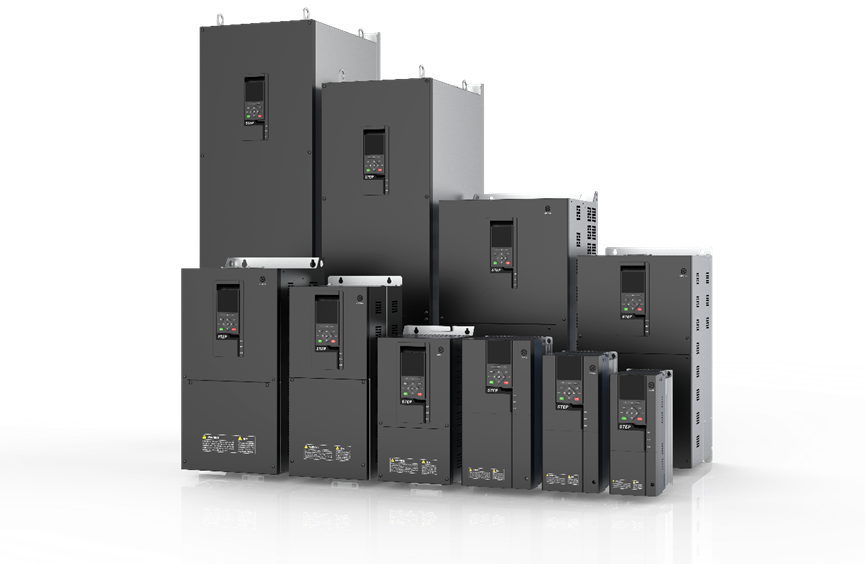
I. The Working Principle of Inverters
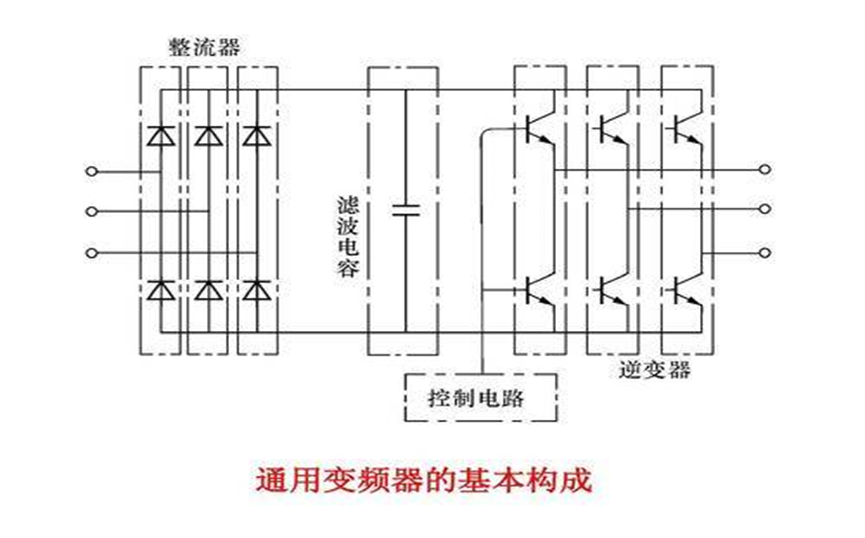
The operating principle of a frequency converter involves precise control of the output frequency of the power supply, thereby enabling adjustment of the motor speed. It consists primarily of two main parts: the input side (rectifier side) and the output side (inverter side). A typical inverter structure includes a rectifier, a filter capacitor, an inverter, and a control circuit.
Rectifier Its function is to convert alternating current into direct current, providing the inverter with the necessary DC power supply.
Filter capacitor It is responsible for eliminating pulsations and ripple in the DC current, ensuring the stability and reliability of the output voltage.
Inverter Its core function is to convert direct current back into alternating current—a process that essentially involves the reverse conversion of electrical energy.
Control circuit It plays a role in detection and control, monitoring the input and output currents and frequencies, and adjusting the output frequency by regulating the switching elements in the inverter.
II. The Function of a Frequency Converter
Energy conservation and consumption reduction: By reducing the motor speed, a variable-frequency drive (VFD) can lower the motor’s power consumption, thereby achieving energy savings. If your production process does not use a VFD to control motor operation, you could face monthly energy costs as high as tens of millions of yuan due to low process efficiency. In today’s energy-conscious era, selecting the right VFD enables more precise and efficient control of motor-driven equipment, helping to reduce operating costs.
Rotational speed adjustment: The frequency converter can precisely adjust the rotational speed of the drive motor to meet operational demands under various load conditions. For example, in manufacturing, machines on production lines often need to adjust their rotational speeds according to changes in product type and production rate; in such cases, using a frequency converter enables flexible speed control.
Torque control: The frequency inverter can also control the torque output of the drive motor, enabling it to maintain a constant output power under varying load conditions. This is particularly important for certain applications that require precise torque control, such as elevators and rolling shutters.
Reduce starting impact: Since variable-frequency drives can achieve gradual start-up and stop, they can effectively reduce the impact and stress during startup and shutdown, thereby extending the service life of equipment.
Protective equipment: The inverter can monitor the operating status of the drive motor in real time by tracking parameters such as current, temperature, and vibration. In case of abnormalities, it can promptly shut down the motor or trigger an alarm. By controlling the motor’s start and stop operations, the inverter reduces the impact and voltage fluctuations during motor startup, thereby extending the motor’s service life.
III. Application Fields of Frequency Converters
Transportation: Variable-frequency drives have wide-ranging applications in the transportation sector, including subways, high-speed railways, and electric vehicles. In electric vehicles, VFDs are used to regulate the motor’s speed and torque, enabling efficient operation of the drive system.
Manufacturing: In manufacturing, frequency converters are widely used to drive various types of machinery and equipment, such as fans, pumps, and compressors. By adjusting the operating frequency and rotational speed of these devices, it is possible to enhance their efficiency and controllability.
Energy sector: In the energy sector, frequency converters are used to provide energy-saving control for various high-power fans and pump loads in power plants. By dynamically adjusting according to fluctuations in grid load, they help achieve both process optimization and energy savings. Additionally, photovoltaic inverters that leverage frequency conversion technology can convert the direct current generated by photovoltaic panels into alternating current and feed it into the power grid.
Mines and Quarries: In mines and quarries, frequency converters are widely used to drive transportation equipment, crushers, feeders, and other machinery. Thanks to the precise control provided by frequency converters, equipment can operate efficiently and stably while reducing energy consumption.
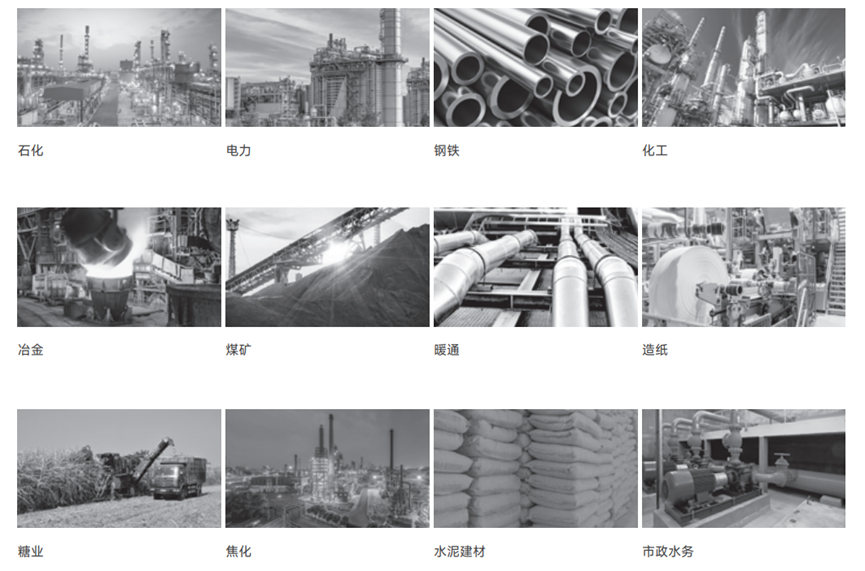
In short, the application of frequency converters in modern industrial production is becoming increasingly widespread. By using frequency converters, it’s possible to control motor speed and output power, thereby saving energy and improving production efficiency and stability.
IV. Taking the power industry as an example, let’s share applications of high-voltage variable frequency drives.
At the end of 2013, Apollo Machinery planned to build a dedicated test station for million-kilowatt-class nuclear power main feedwater pumps. If this test station is completed, it will mark the first-ever instance internationally of conducting project testing on numerous nuclear power plant pumps at a pump manufacturing facility, setting an international precedent. The project also imposes special requirements on the operation of variable-frequency drives.
1) The inverter not only needs to have a long-term operating capacity of 12,000 kW, but also must be compatible with 10 kV, 6.6 kV, and 6 kV systems.
2) Consider conducting certain destructive tests on the pump, which should have a certain overload capacity.
3) The pump needs to undergo long-term durability testing. Considering the need for energy efficiency during the test, the inverter must be capable of seamless switching between variable frequency operation and power-frequency operation (the customer’s grid has a total capacity of only 16,000 kVA). Therefore, the requirement is that the current must not experience any transient surge during the switching process.
Based on the customer’s tender requirements and leveraging its own technological strengths, STEP provides users with a complete high-voltage variable frequency drive system solution. This solution is centered around the VFD itself, complemented by a line-frequency bypass section provided by the customer, a motor selection switching mechanism, and an on-site power monitoring system.
On July 2, 2014, Shanghai Apollo Machinery Co., Ltd. successfully completed the acceptance testing of the first auxiliary feedwater pump unit with China’s own intellectual property rights. This product fills a domestic gap and is of great significance in promoting the localization and self-reliance of critical core equipment for China’s nuclear power plants, completely breaking the monopoly held by foreign manufacturers.
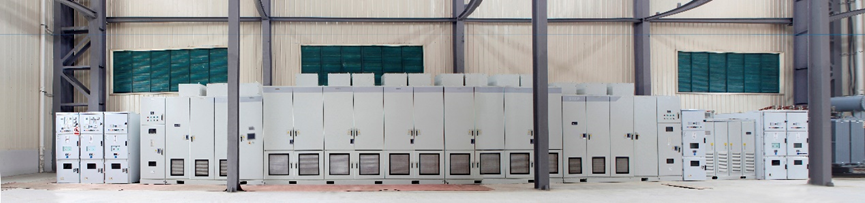
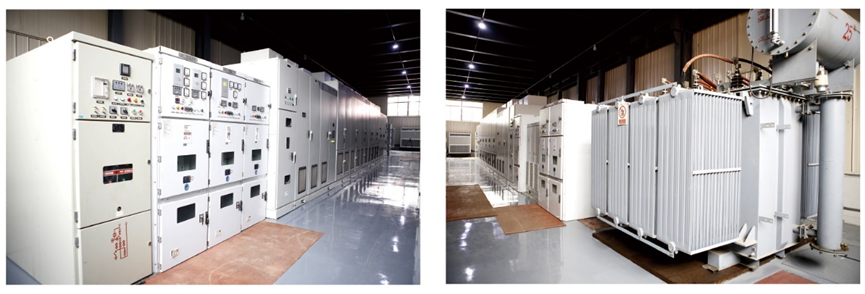
The following figure shows the high-voltage inverter room for this project.
Next:

Contact Us
Email:
market@stepelectric.com
Address:
No. 1560, Siyi Road, Jiading District, Shanghai Municipality