
PAC—Next-Generation Industrial Electronic Control System
2024-08-08

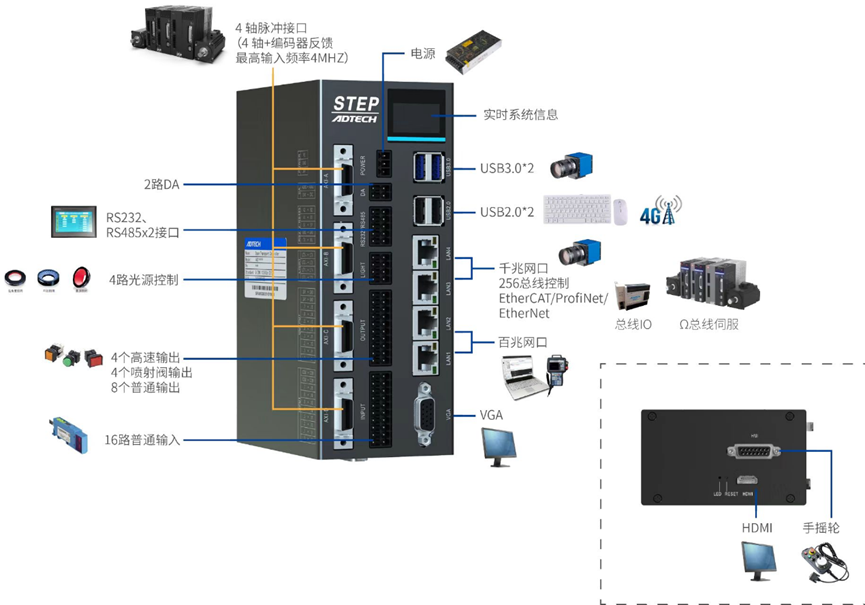
PAC, short for Programmable Automation Controller, is an advanced device used in the field of industrial control. It combines the features of both PLCs (Programmable Logic Controllers) and PCs (Personal Computers), offering not only the real-time control capabilities of a PLC but also the openness and flexibility of a PC.
The main differences between PACs and PLCs lie in their openness, versatility, and network connectivity capabilities. While PLCs are primarily used for performing simple control tasks, such as switch control and sequential control, PACs can handle more complex tasks, including data analysis, graphical display, and network communication. In addition, PACs support multiple programming languages, such as C, C++, and Java, allowing users greater flexibility in writing and modifying control programs.
In terms of application scenarios, PAC is widely used in various fields, including manufacturing, the energy sector, the transportation industry, and environmental protection. For example, in manufacturing, PAC can be applied to robot control, automated assembly lines, and quality inspection; in the energy sector, PAC can be used for monitoring and managing power systems; in the transportation industry, PAC can be employed to control public transportation systems such as subways and light rail; and in the environmental protection sector, PAC can be utilized to manage environmental facilities like wastewater treatment plants and waste disposal systems.
In terms of user group classification, PAC is more suitable for users who need to handle complex control tasks. These users typically have a certain level of programming background and can leverage PAC’s powerful features to meet their specific control requirements. Moreover, thanks to PAC’s openness, users can also independently develop or integrate new functional modules as needed to adapt to ever-changing control environments.
In terms of technical performance , PAC has the following characteristics:
1. Real-time capability: PAC boasts powerful real-time processing capabilities, enabling it to complete large volumes of data processing and control tasks within a short period of time.
2. Openness: PAC supports multiple programming languages and operating systems, allowing users to choose the development environment that best suits their needs.
3. Network Connectivity: The PAC boasts powerful network connectivity, enabling convenient data exchange and communication with other devices.
4. Multifunctionality: In addition to basic real-time control functions, the PAC also features a variety of capabilities such as data analysis, graphical display, and remote monitoring.
5. Scalability: PAC boasts excellent scalability, allowing users to increase or decrease hardware and software resources as needed.
Overall, a PAC is a powerful and highly versatile industrial control device capable of meeting the complex control requirements of modern industrial production. As industrial automation technology continues to evolve, the applications of PACs will become increasingly widespread.
Previous:

Contact Us
Email:
market@stepelectric.com
Address:
No. 1560, Siyi Road, Jiading District, Shanghai Municipality