
In-depth Coverage | STEP Robotics Customizes Zero-Pallet Replenishment Software Package for the Synthetic Fiber Industry
2020-04-15

Gain an in-depth understanding of the demand in the synthetic fiber industry,
For the specific operating conditions of palletizing finished synthetic fiber products in cartons,
Custom-developed zero-batch continuation code package,
It provides tangible convenience for customers' use.
Track and trace
Hongze United Chemical Fiber Co., Ltd.
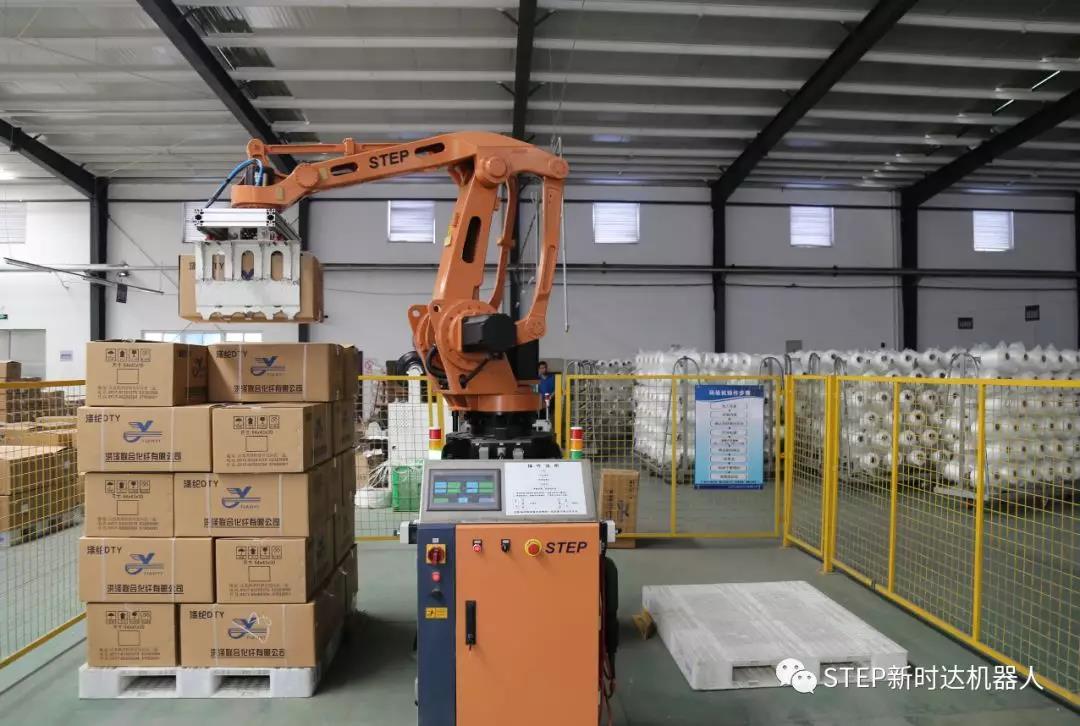
STEP Robot Workstation: Palletizing Finished Synthetic Fiber Products in Boxes
Number of STEP robots: SP120/2400, 3 units
Robot deployment start date: August 2016
“We’re no longer recruiting palletizing workers.”
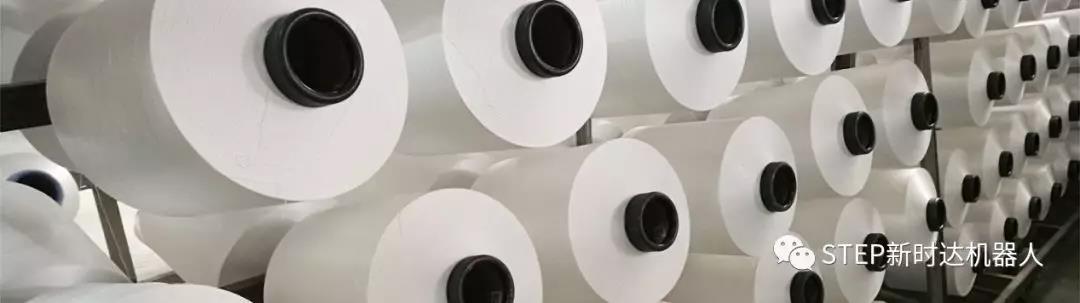
Located on the picturesque shores of Hongze Lake, United Chemical Fiber is the largest synthetic fiber spinning and texturing production base in northern Jiangsu. At the shipping docks of United Chemical Fiber and its subsidiary, Sanlian New Materials, trucks line up in long queues, patiently waiting to load their goods—a scene brimming with bustling activity. Over the past three-plus years, three STEP palletizing robots—models SP120/2400—have been working at United Chemical Fiber’s factory, handling the palletizing of hundreds of thousands of tons of boxed finished synthetic fibers. These robots have relieved workers from strenuous physical labor, enabling them to take on lighter, more rewarding tasks and generating substantial economic benefits for the company.
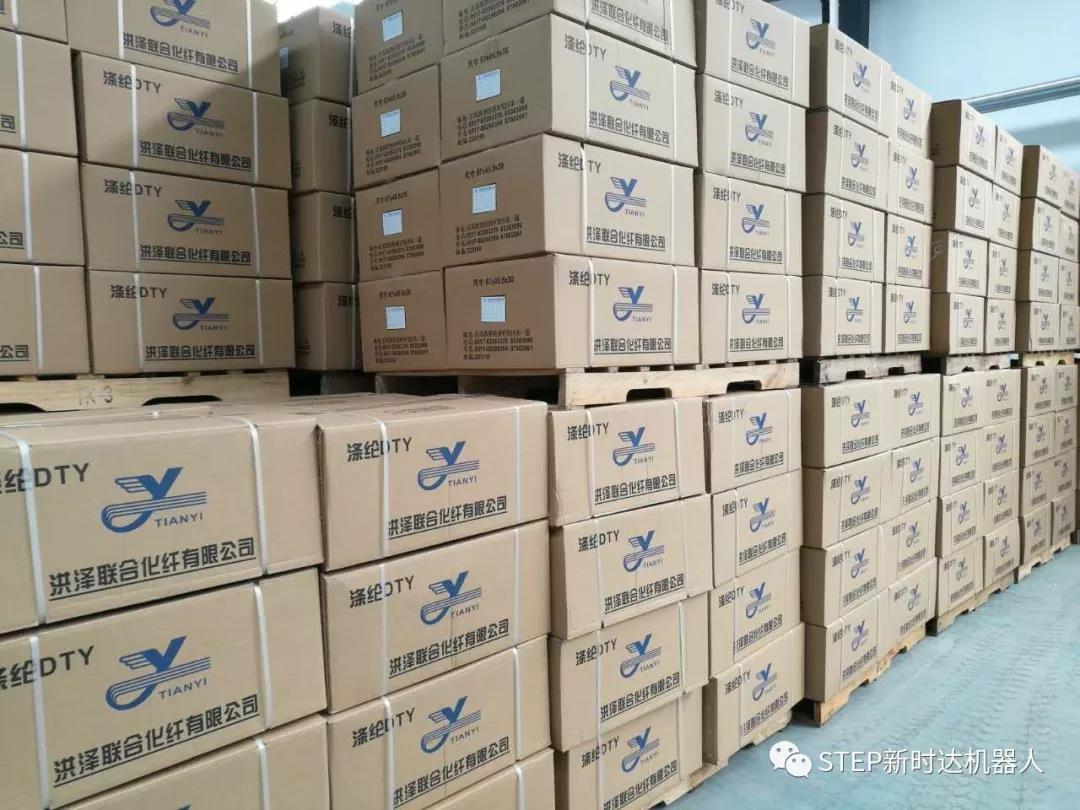
At the entrance of the factory belonging to Sanlian New Materials, a subsidiary of United Synthetic Fiber, the recruitment notices posted year-round offer monthly salaries exceeding 6,000 yuan for operators working in two 12-hour shifts. The company provides free room and board, and even offers benefits such as assistance with enrolling children in school. Compared to the local average wage of just over 3,000 yuan, this salary is significantly higher. The workshop supervisor explained that because palletizing workers have high physical demands—each shift involves lifting boxes weighing more than 30 kilograms, often hundreds or even thousands of boxes per day—it’s really tough on the human body, especially during summer when warehouse temperatures exceed 40 degrees Celsius, leaving workers drenched in sweat even without doing any actual work. A few years ago, we could still easily recruit palletizing workers, but it’s become increasingly difficult. In 2016, we decided to replace human workers with robots for palletizing tasks. After successfully testing our first robot, we achieved excellent results. We’ve since purchased two more robots, and now all palletizing stations are operated by robots. As a result, United Synthetic Fiber no longer employs human palletizers at all.
“Zero-stack code continuation—small software solves big problems.”
Due to the wide variety of products, the chemical fiber industry faces frequent order changes and a large number of material types. Almost every day, there are one or two instances where the last stack of a particular product cannot be fully loaded. Because these partial stacks are irregular in shape, it’s quite challenging to store them in the warehouse and subsequently load them onto trucks. A competitor’s solution was to install sensors. However, given that such situations occur infrequently, this approach has ended up increasing users’ costs.
Mr. Cheng, General Manager of Shangfeng Technology, is an expert in robotic applications. During the project implementation, he suggested that, given the fixed stacking pattern, all that was needed was to add a counting function to the palletizing software. Next time the system is used, users would simply need to tap the count button once, and the robot could automatically resume palletizing—thus solving the problem. Although the issue wasn't complicated, the application software package was embedded within the robot’s system, so it required the robot manufacturer itself to carry out the implementation. With a “let’s give it a shot” attitude, Mr. Cheng reached out to STEP Robotics. After confirming that this was indeed a common industry need, STEP’s engineers promptly wrote new code, conducted thorough testing, and optimized the user interface, successfully resolving the issue of resuming palletizing from zero.
“Small software, solving big problems. This simple technical issue perfectly embodies STEP Robot’s user-centric service ethos—addressing users’ urgent needs with the utmost urgency.” Looking back on the system integration process carried out for United Chemical Fiber, Mr. Cheng, General Manager of Shangfeng Technology, expressed great satisfaction with the customized software package services provided by STEP Robot throughout the project implementation.
Precisely for this reason, STEP Robotics has provided technical support to Shangfeng Technology, enabling Shangfeng Technology to gain a technological edge and take the initiative in market competition.
Palletizing finished synthetic fiber products in boxes

Contact Us
Email:
market@stepelectric.com
Address:
No. 1560, Siyi Road, Jiading District, Shanghai Municipality