
Skills Competition: STEP Engineer Wins Gold Medal with Bravado
2019-11-19

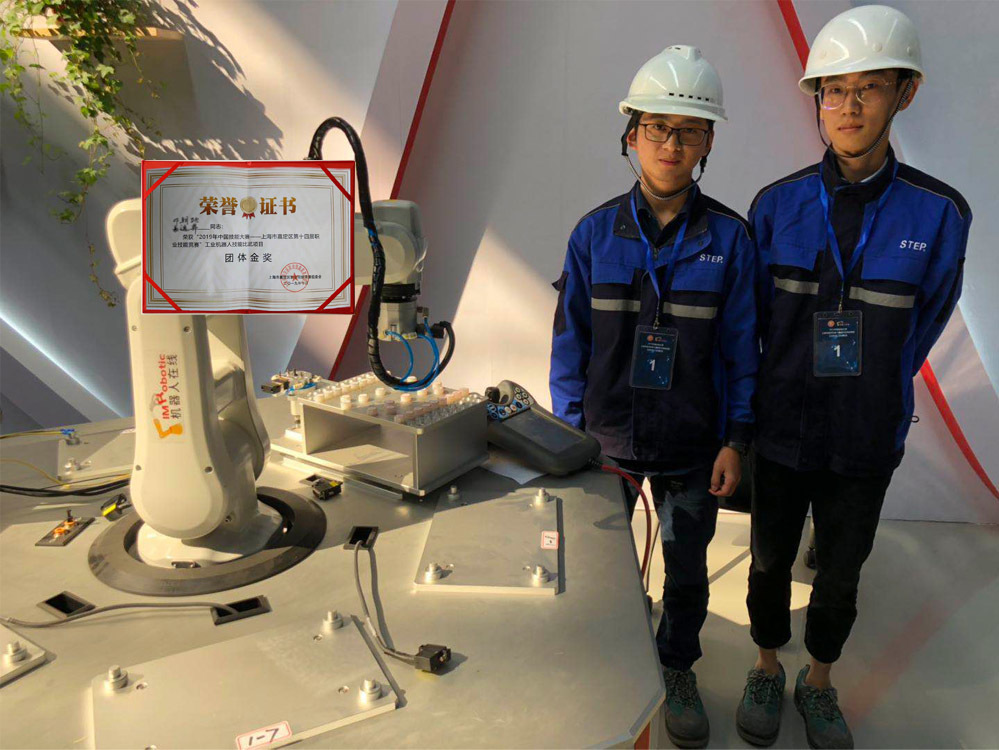
Recently, the Jiading District Bureau of Human Resources and Social Security held the “2019 China Skills Competition—The 14th Jiading District Vocational Skills Competition of Shanghai Municipality—Industrial Robot Skills Competition.” Companies including Estun Robotics, Tianhe Automotive, Weipai Ge, Dinghu Automation, and Yike Robotics registered to participate. The competition brought together top talents from industrial robot enterprises across Jiading District, making it a gathering of highly skilled professionals. In the team event of the “Industrial Robot Technology Application” skills competition, Yuan and Deng, engineers from Estun Robotics, stood out with their solid business knowledge and professional technical expertise, clinching first place and winning the gold medal for their team.
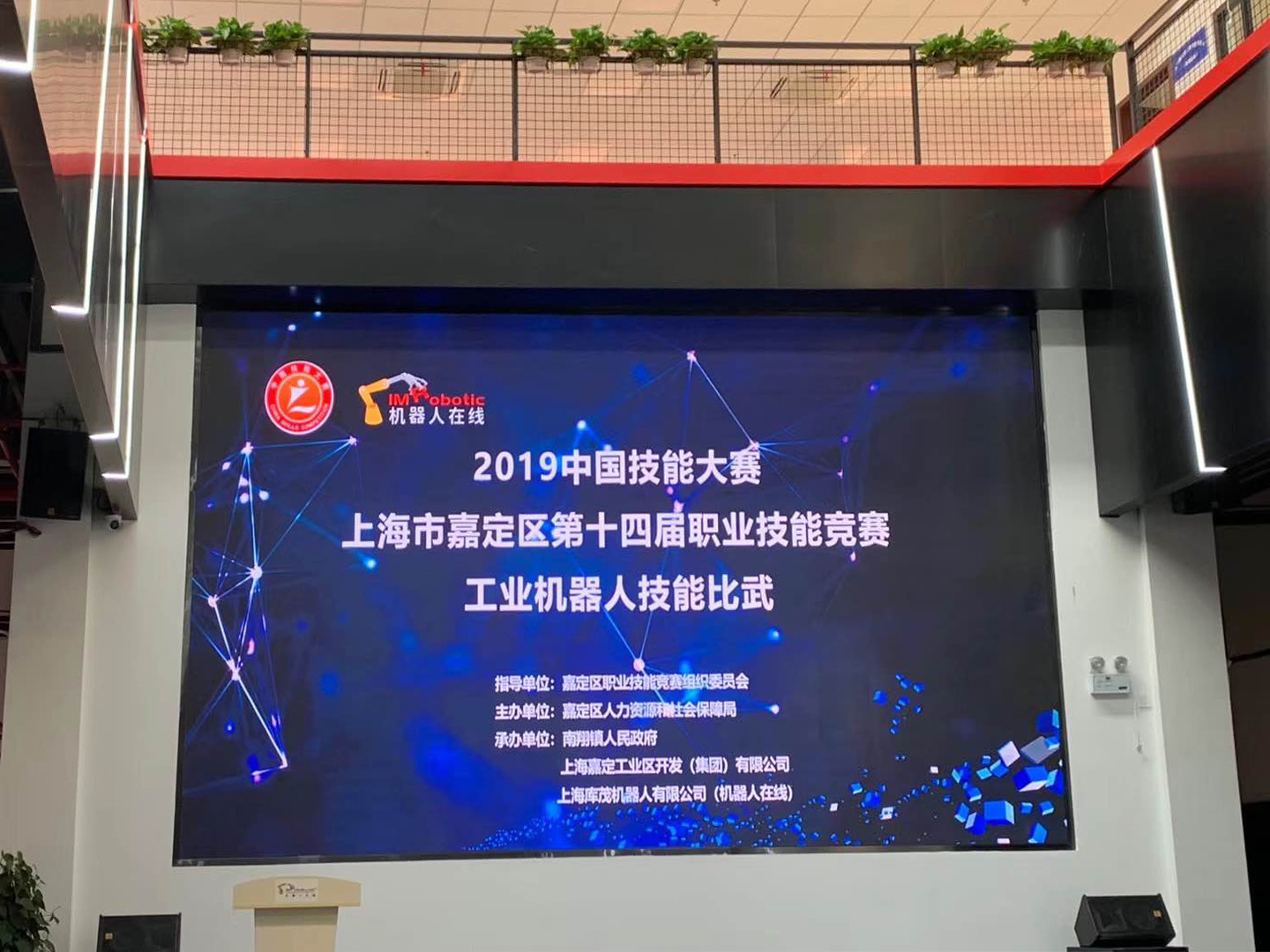
This skills competition is divided into three stages: “Visual Communication Debugging,” “Professional Competence and Safety Operation Standards Assessment,” and “Robot Program Debugging.” The teams sent by each company performed evenly matched in the first two stages, and the competition in the final stage—“Robot Program Debugging”—will directly determine the winner of the contest.

In the “Robot Program Debugging” segment, participants are required to use a pre-built robotic platform to reposition two rows of randomly arranged chess pieces, thereby simulating real-world industrial robot applications and completing a basic workflow that includes robotic palletizing, visual sorting and recognition, and product handling. This segment places particular emphasis on contestants’ operational skills with robots and their logical abilities in program assembly. It’s the segment that best showcases specialized technical expertise. Given that scores among participants tend to be very close, ordinary approaches simply won’t cut it. To earn high marks, contestants must come up with something truly innovative and unconventional.
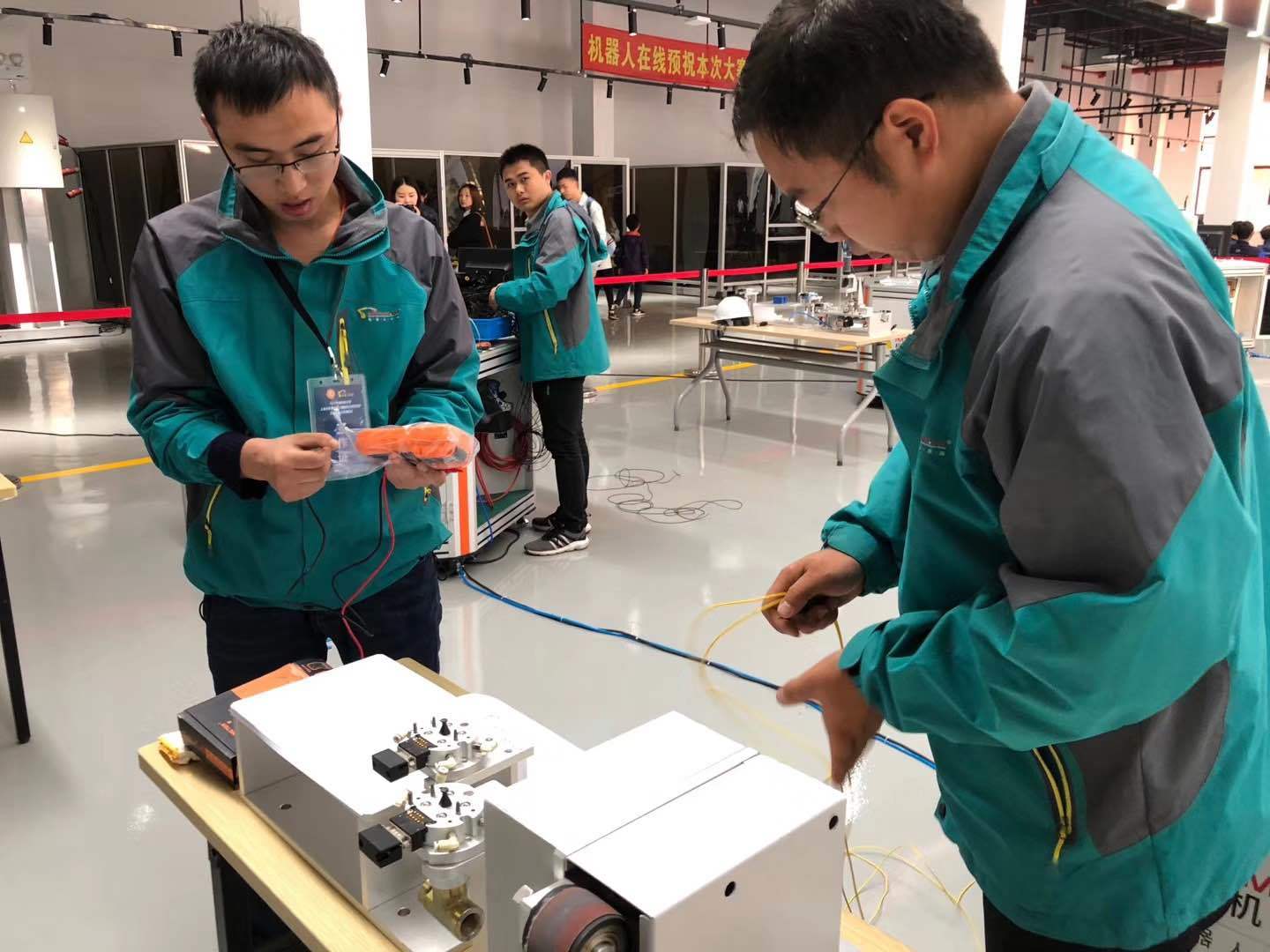
Time is running short, and the teams led by Engineer Yuan and Engineer Deng are anxiously watching as they fail to close the gap with their competitors. During their discussion of the program’s approach, they realized that industrial robots in the production process emphasize precision and efficiency—and the competition rules are based on these very principles. The contest also tests the participating teams’ speed and accuracy in stacking the pieces. Only by outperforming other teams in both of these areas can they hope to emerge victorious.
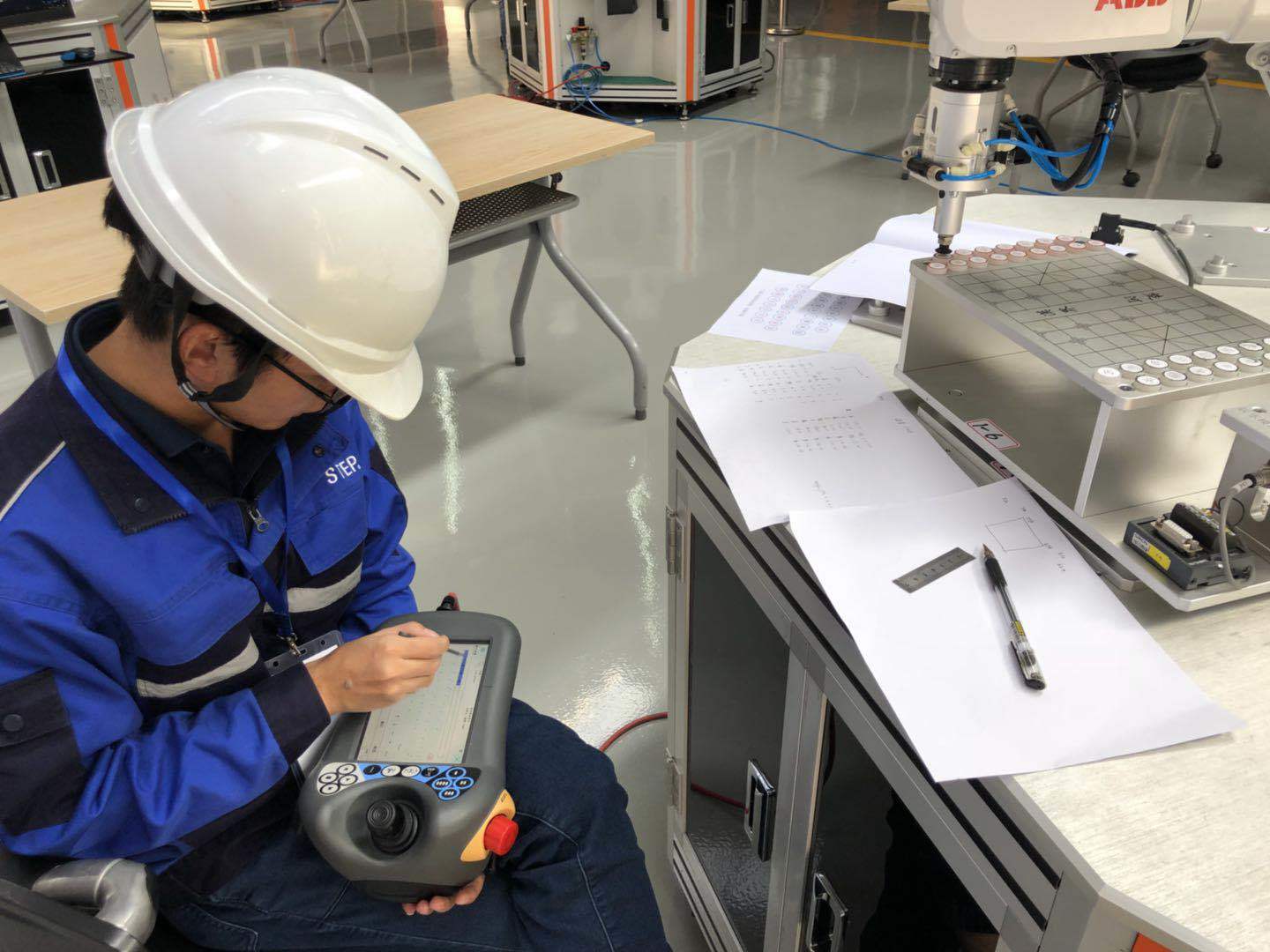
They realized that it would be difficult to stand out using traditional programming approaches. So they took an unconventional path and came up with a cutting-edge programming method they’d tried during previous training sessions: instead of relying solely on “point-to-point” imperative programming, they adopted function statements based on “position offset.” In point-to-point movements, “position offset” enabled the robot to achieve greater precision in positioning the chess pieces and to return them to their original positions more quickly. It was precisely this decision that allowed their team to become the only one to perfectly complete the assessment task—while all other teams that had used “point-to-point” imperative programming failed to meet the target. In the end, Yuan and Deng’s team earned a perfect score and won the gold medal in the team competition.

Contact Us
Email:
market@stepelectric.com
Address:
No. 1560, Siyi Road, Jiading District, Shanghai Municipality