
Application Case | Unordered Pallet Unloading in Smart Logistics
2019-03-29

According to statistics, China generates approximately 100 million express deliveries every day. So, how does this massive logistics operation function within warehouses?
Warehouse Workflow
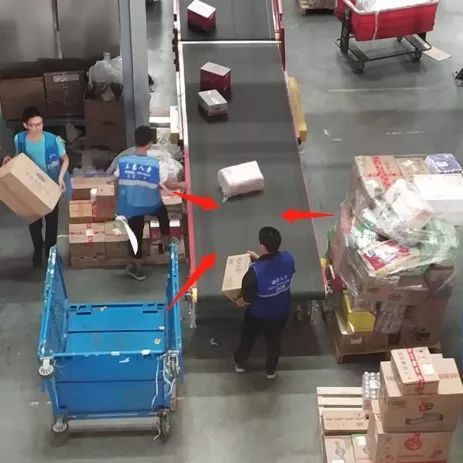
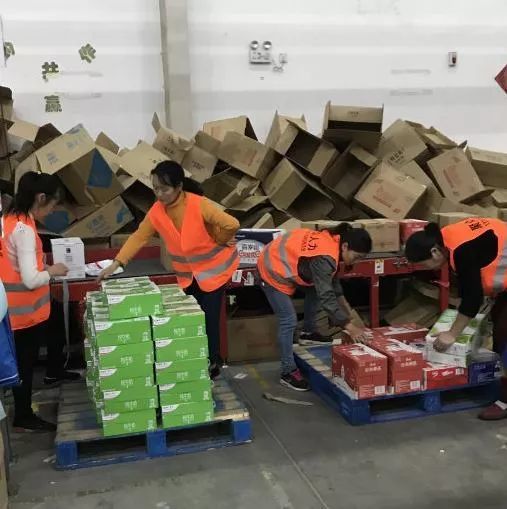
In storage warehouses, packaging is predominantly in the form of cardboard boxes, and there are many different types of boxes. Traditionally, sorting has relied mainly on manual labor, which is highly labor-intensive and results in high labor costs for workers.
Step 1, After receiving the message, the high-level forklift operator places the high-level goods onto the lowest shelf. The manual forklift operators then pick items from the lowest shelf and place them onto pallets. Since customer orders are generated randomly, the goods placed on the pallets are also random.
Step 2, The forklift operator brings the pallets loaded with goods to beside the conveyor belt, where workers are waiting to transfer them onto the belt.
Step 3, Workers positioned alongside the conveyor belt are transferring goods from pallets onto the conveyor belt.
Step 4, As the boxes on the conveyor belt pass the end of the line, workers scan them and then release them from the warehouse.
Project Challenges: Difficulties in Robot Operations
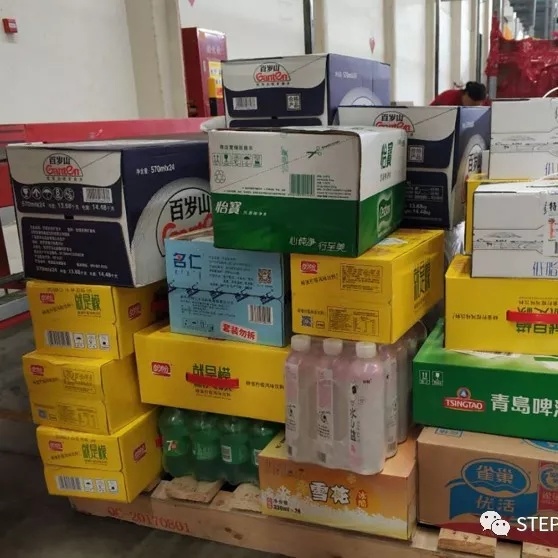

Since the goods are stacked in a disorganized manner, it’s impossible to predict where the robot’s next gripping point will be.
It cannot be resolved at runtime by pre-emptively avoiding it.
The warehouse boasts a wide variety of box types and employs simple packaging methods; this is especially true for certain fragile items, such as wine boxes.
Unordered Pallet Unloading in Smart Logistics
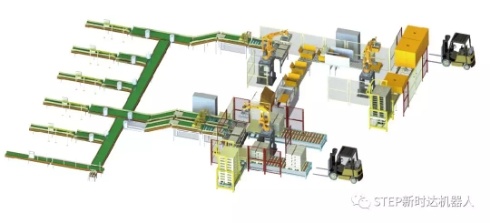
In the STEP solution, robots replace the workers who were previously “stationed alongside the conveyor belt,” and the task of transferring goods from pallets onto the conveyor belt is now performed by robots.
The workstation employs a single-robot, dual-vision system, achieving a visual recognition success rate as high as 99.99%.
Each workstation can replace 3-4 workers, and the time cycle for each cargo-handling operation can be reduced by 30%.
Using robots to perform disordered pallet unloading can significantly reduce the physical labor intensity of on-site workers during secondary handling.
This project has been running continuously for 6 months without any failures and successfully passed the stress test during “Double 11.”
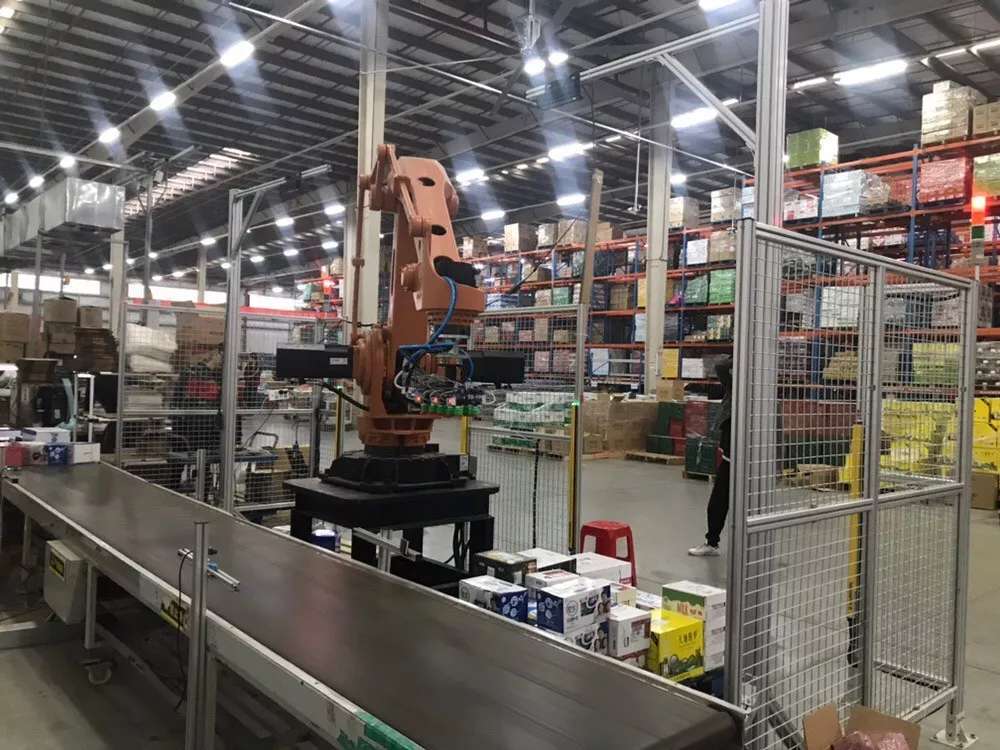
The implementation of the smart logistics solution—the robotic unstructured palletizing project—not only significantly boosts work efficiency but also generates substantial savings by reducing labor costs.
Previous:

Contact Us
Email:
market@stepelectric.com
Address:
No. 1560, Siyi Road, Jiading District, Shanghai Municipality