
The 2018 Shanghai Top 100 Enterprises List was released, and STEP made the cut in three categories.
2018-08-31

The lists of the Top 100 Shanghai Enterprises, Top 100 Shanghai Manufacturing Enterprises, and Top 100 Shanghai Service Enterprises for 2018—as well as the lists of the Top 100 Shanghai Private Enterprises, Top 100 Shanghai Private Manufacturing Enterprises, and Top 100 Shanghai Private Service Enterprises—were unveiled on August 24. These lists were jointly released by the Shanghai Enterprise Confederation, the Shanghai Entrepreneurs Association, and the Shanghai Economic Organizations Federation. The lists of the Top 100 Shanghai Enterprises, Top 100 Shanghai Manufacturing Enterprises, and Top 100 Shanghai Service Enterprises for 2018—as well as the lists of the Top 100 Shanghai Private Enterprises, Top 100 Shanghai Private Manufacturing Enterprises, and Top 100 Shanghai Private Service Enterprises—were unveiled on August 24. These lists were jointly released by the Shanghai Enterprise Confederation, the Shanghai Entrepreneurs Association, and the Shanghai Economic Organizations Federation.
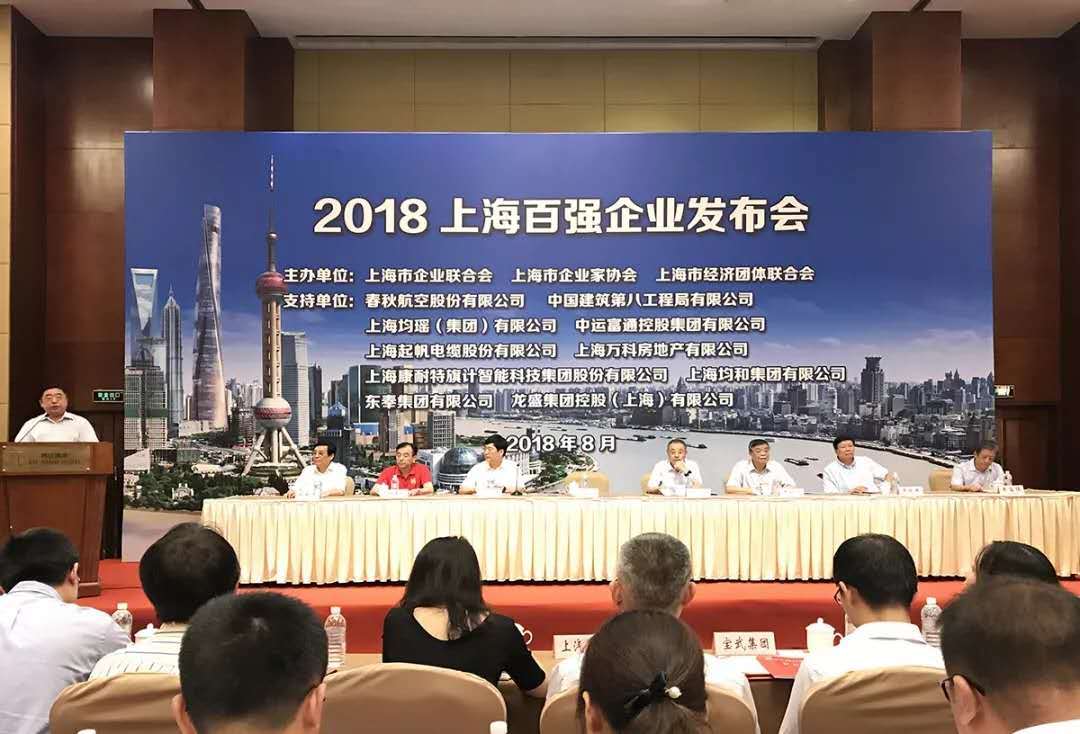
The top three companies among the Top 100 Shanghai Enterprises in 2018 were: Shanghai Automotive Industry Corporation, China Baowu Steel Group Co., Ltd., and Bank of Communications Co., Ltd. The top three companies among the Top 100 Shanghai Manufacturing Enterprises were: Shanghai Automotive Industry Corporation, China Baowu Steel Group Co., Ltd., and Bright Food (Group) Co., Ltd. The top three companies among the Top 100 Shanghai Private Enterprises were: Shanghai Vanke Real Estate Co., Ltd., Fuxing International Co., Ltd., and Shanghai Steel Union E-Commerce Co., Ltd.
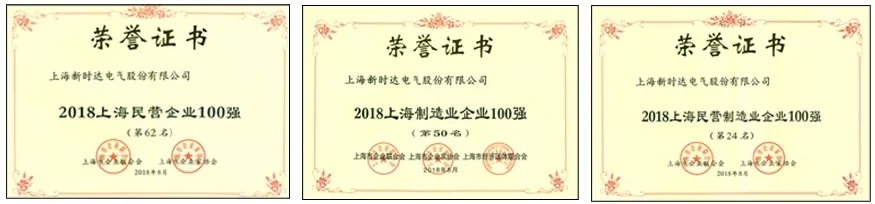
Shanghai STEP Electric Co., Ltd. has been shortlisted for three rankings.
50th among the Top 100 Manufacturing Enterprises in Shanghai, 2018
62nd among the Top 100 Private Enterprises in Shanghai, 2018
24th among the Top 100 Private Manufacturing Enterprises in Shanghai, 2018
The 2018 Shanghai Top 100 Enterprises List used 2017 enterprise operating revenue as the entry threshold. Tang Yunyi, a researcher at the Shanghai Academy of Social Sciences, noted that in 2018, the overall scale of operations and development quality of the Shanghai Top 100 enterprises continued to show a significant upward trend. Compared with 2014, the operating scale of these enterprises has steadily expanded, and the entry threshold rose dramatically from 3.07 billion yuan to 4.99 billion yuan. At the same time, the total operating scale and net profits of the Top 100 enterprises increased from less than 4 trillion yuan and 235.5 billion yuan, respectively, to over 6 trillion yuan and 438.8 billion yuan. Their annual compound growth rates exceeded 9% and 13%, respectively—both significantly higher than the nominal GDP’s annual compound growth rate of 8.7%. This clearly demonstrates that, as China enters a new normal economic phase, the Top 100 enterprises have become a key driving force behind regional economic growth.
Zhang Peirong, Director of the Consulting and Research Department of the Shanghai Enterprise Federation, stated that cultivating new advantages for Shanghai’s advanced manufacturing sector requires not only overcoming challenges in emerging technology fields but also achieving innovative breakthroughs in traditional sectors. In this process, the leading role played by large enterprises often proves to be the key determinant of industrial transformation and upgrading.
Development centered on enhancing the quality and efficiency of economic growth must place even greater emphasis on improving total factor productivity. Total factor productivity measures the extent to which an economy grows when inputs of resources, capital, and labor remain constant; it is the most important indicator for gauging economic efficiency. There are three key factors that determine total factor productivity: increasing investment in science and technology to boost the economy’s endogenous growth potential; enhancing human capital to raise labor productivity; and ensuring a favorable operating environment through institutional reforms.
Currently, with the widespread adoption of internet technologies and the rapid proliferation of smart devices, intelligent manufacturing technologies and unmanned systems have made significant qualitative leaps, opening up new and greater opportunities for enterprises to enhance labor productivity. Experts recommend that the government should formulate practical and feasible policies to guide manufacturing and service enterprises in promoting and adopting unmanned production and service systems, striving to increase the intellectual intensity of enterprises, reduce simple, repetitive tasks, and achieve greater value output with fewer labor inputs.

Contact Us
Email:
market@stepelectric.com
Address:
No. 1560, Siyi Road, Jiading District, Shanghai Municipality