
The sewing machine hasn’t become obsolete—it’s simply evolved. | Zhongweixing Template Machine Application Cases
2018-08-28

Next door, Aunt Wang’s family has an old-fashioned sewing machine that’s meticulously wiped clean every day. These aged objects, having weathered the passage of time, now carry cultural and emotional significance that far surpasses their original material value. Some of these items may have already faded from daily life, yet others continue to evolve—though they’ve simply slipped out of the public eye.
 Old-fashioned sewing machine
Just as today’s sewing machines have long since evolved from their original form—replacing the foot-powered, hand-cranked mechanisms with motor-driven ones—they’ve gradually freed people from laborious physical tasks. These machines are now rarely used in homes and have instead shifted to factory settings. With the continuous advancement of control systems, fully automated sewing equipment—template machines—that offer superior processing accuracy, production efficiency, and stability are rapidly gaining traction in the market.
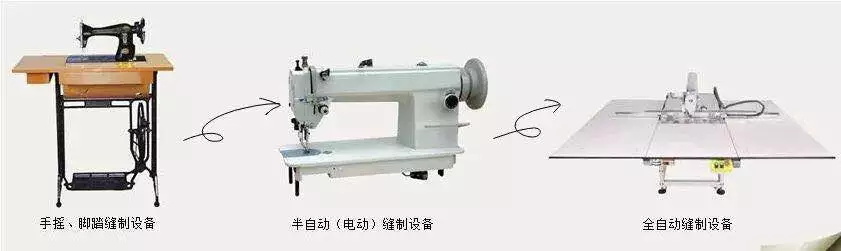 The Evolution of the Sewing Machine
The template machine is a type of general-purpose sewing equipment that combines the functions of a flat-sewing machine and certain embroidery machines. First, workers cut various slots into PVC or acrylic boards according to the dimensions required for the garment, then secure these boards onto the template machine. During sewing, the slots previously cut serve as the path along which the thread travels, enabling more precise and faster stitching. This not only boosts efficiency but also reduces the rate of defective products and lessens the reliance on specialized personnel.
According to the head of the template machine control system at Zhongweixing (a member of the STEP Group), fully automated template machines offer unparalleled advantages over traditional sewing equipment. These machines can handle most sewing processes, delivering high-quality stitching that is both consistent and reproducible. Creating templates and operating the machine via buttons is convenient and quick. Even workers without specialized skills can operate multiple machines simultaneously, making them ideal for assembly-line operations. As automated equipment becomes more widespread, the textile industry is poised to shift further from automated, interconnected systems toward smart factories in the future.
For the template machine market, Zhongweixing has launched the MTC500 series template machine control system. This system offers multi-axis control and can be configured with either stepper or servo drivers depending on specific requirements. It supports a wide range of mainstream spindle motors available on the market, with a maximum machining speed of up to 3,600 rpm. The system operates smoothly, ensuring stable and precise machine performance. It is primarily used in sewing equipment for garments, home textiles, automotive seat cushions, and similar applications.
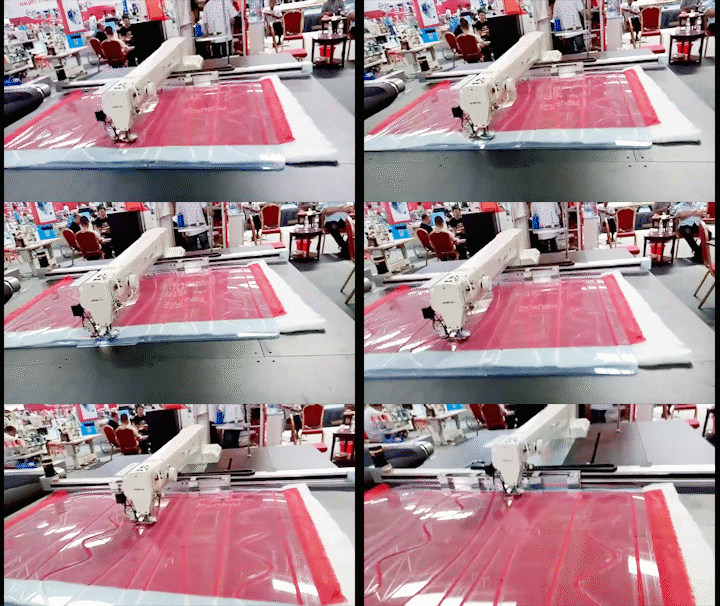 Zhongweixing MTC500 Template Machine Application Case
Features of the MTC500 Series Template Machine Control System
The system employs a dual-CPU control architecture, with each CPU responsible for application-layer data parsing and motion control algorithms, respectively, ensuring smooth and highly efficient system operation.
The pulse frequency can reach up to 4 MHz, and the machining positioning accuracy is high.
The spindle servo is integrated within the system and controlled and monitored via an internal bus, truly achieving fast, precise, and stable spindle machining.
The laser and brush functions employ a preprocessing approach to ensure smooth and stable acceleration and deceleration transitions during various trajectory changes, thereby preventing overshoot or missed machining operations.
The system features one-button operation: simply press the start button, and the equipment will automatically begin working. During processing, if any abnormality occurs, the system will automatically sound an alarm and shut down.
The system features automatic template recognition, which reduces the number of procedures and workers, significantly boosts efficiency, and aligns with standardized operational workflows.
Previous:

Contact Us
Email:
market@stepelectric.com
Address:
No. 1560, Siyi Road, Jiading District, Shanghai Municipality