
Principles and Features of Facial Recognition-Based Elevator Access Technology
2024-09-05

What is “facial recognition elevator technology”?
Facial recognition elevator technology is an intelligent system that enables contactless elevator calls and floor selection by recognizing individuals’ facial features. The widespread adoption of this technology has not only enhanced the convenience and safety of elevator use but has also played a crucial role in epidemic prevention and control, effectively reducing the risk of cross-infection.
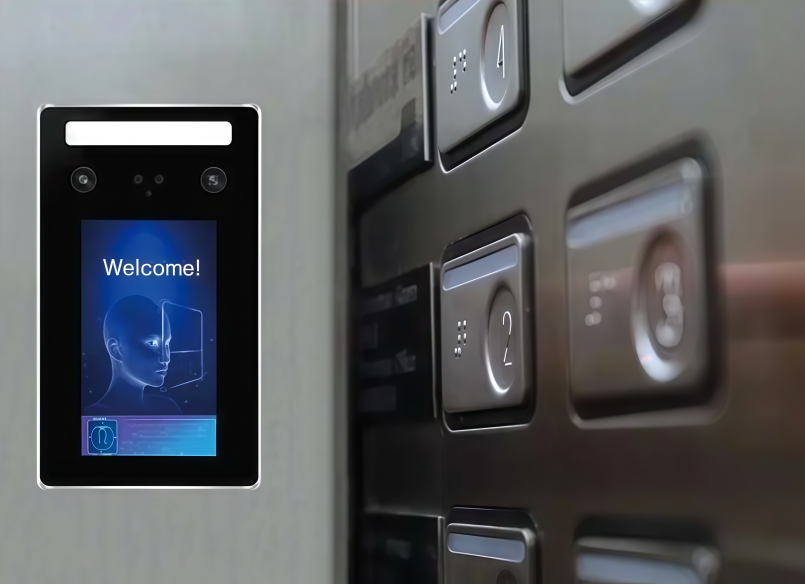
The core of “facial recognition elevator technology”
The core of facial recognition-based elevator technology lies in leveraging facial recognition technology. By installing facial recognition terminals at elevators or access control points, the system can capture and scan users’ facial features in real time. This biometric information is transmitted to the system and compared against a pre-entered facial database for verification. Once the verification is successful, the system automatically grants access to the corresponding floor, allowing users to reach their designated floor without having to manually press any buttons.
The technical principle of “facial recognition elevator technology”
In terms of technical principles, the face-recognition elevator access technology is primarily based on computer image processing techniques and biostatistical principles. The system first captures facial images using a high-definition camera and then employs a face detection algorithm to quickly locate the facial region. Next, the system extracts key feature information from the face, such as the positions and shapes of the eyes, nose, and mouth. This feature information is then compared with data pre-stored in the database; if a match is found, the user is granted access to the specified floor.

Advantages of “Facial Recognition Elevator Technology”
Facial recognition-based elevator access technology offers significant advantages. First, it enhances the convenience of elevator use—users no longer need to carry access cards or keys; they can simply “scan their face” to gain access. Second, it boosts security, as the system allows only authorized users to take the elevator, effectively preventing unauthorized entry. Third, facial recognition-based call-and-ride functionality also improves management efficiency by automatically recording elevator usage patterns and passenger data, thereby providing valuable support for property management.
Application of “Facial Recognition Elevator Technology”
In terms of application scenarios, facial recognition-based elevator access technology is widely used in office buildings, business centers, upscale residential communities, public buildings, and other venues that require strict control over personnel entry and exit. For example, in upscale residential communities, the system can effectively manage access permissions for residents and visitors, thereby enhancing community security. In commercial office buildings, this system can optimize elevator scheduling and improve office efficiency.
In addition, with the advancement of artificial intelligence technology, facial recognition-based elevator call systems are continuously being upgraded and refined. For example, some advanced systems not only recognize faces but also support a variety of methods for calling elevators and selecting floors, including QR codes, mobile phone Bluetooth, and WeChat mini-programs, offering users more diverse options.
Overall, facial recognition-based elevator technology—with its features of efficiency, convenience, and security—is gradually transforming traditional elevator usage and becoming an important component of smart buildings.
Features of the New-Time Smart Facial Recognition Elevator System
• The facial recognition all-in-one device installed at an appropriate location inside the elevator car interacts with the system via communication to achieve access authorization and elevator call functions.
• The system supports dynamic anti-counterfeiting technology, effectively identifying and blocking fraudulent methods such as the use of static photographs.
• Equipped with exceptional nighttime recognition capabilities, ensuring accurate facial recognition even in low-light environments.
• It flexibly supports both on-premises and cloud deployment modes, meeting security and convenience requirements in various scenarios.
• Equipped with large-capacity local storage, capable of storing massive amounts of facial photos and recognition record information.
• A rapid identification and response mechanism that can quickly register the user’s destination floor, thereby improving elevator operational efficiency.
• Able to detect the presence of strangers and support capturing and saving on-site photos, enhancing security management.
• While acquiring elevator malfunction information, the cloud-based deployment model can leverage facial recognition technology to detect and alert on trapped-person incidents, thereby assisting in emergency rescue operations.
• This solution can also be integrated with a smartphone-based elevator call system, enabling complementary advantages in technology and functionality and further expanding application scenarios.

Contact Us
Email:
market@stepelectric.com
Address:
No. 1560, Siyi Road, Jiading District, Shanghai Municipality