
In the age of AI already, do you still have so many worries when taking the elevator? (Part 3)
2024-09-18

Special equipment experts would like to especially remind you that elevators are equipped with a “self-correcting” function. If you notice any “abnormal phenomena,” please remain calm and wait for the elevator to initiate its next step—automatically activating the correction program.
Today, let’s learn together about this “hidden yet powerful” elevator self-correction skill.
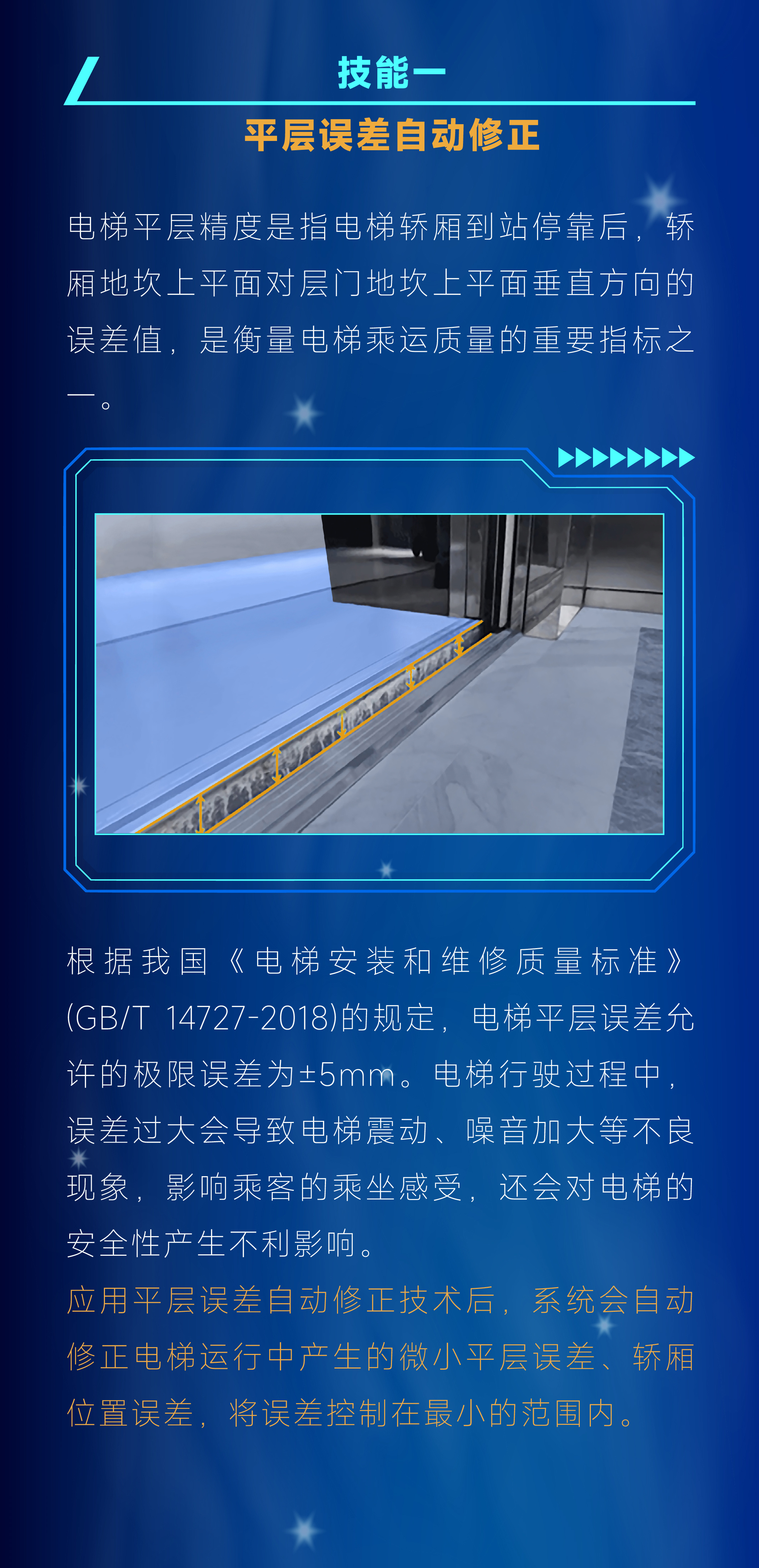
Automatic correction of planar error
Elevator leveling accuracy refers to the vertical deviation between the floor of the elevator car and the floor of the landing door after the car has come to a stop at a designated floor. It is one of the key indicators for measuring the quality of elevator operation.
According to the "Quality Standards for Elevator Installation and Maintenance" (GB/T 14727-2018) of China, the permissible tolerance for elevator leveling error is ±5 mm. Excessive errors during elevator operation can lead to adverse phenomena such as increased vibration and noise, thereby affecting passengers' riding experience and also having a negative impact on the elevator's safety.
After applying the automatic leveling error correction technology, the system will automatically correct minor leveling errors and car position errors that occur during elevator operation, keeping these errors within the smallest possible range.
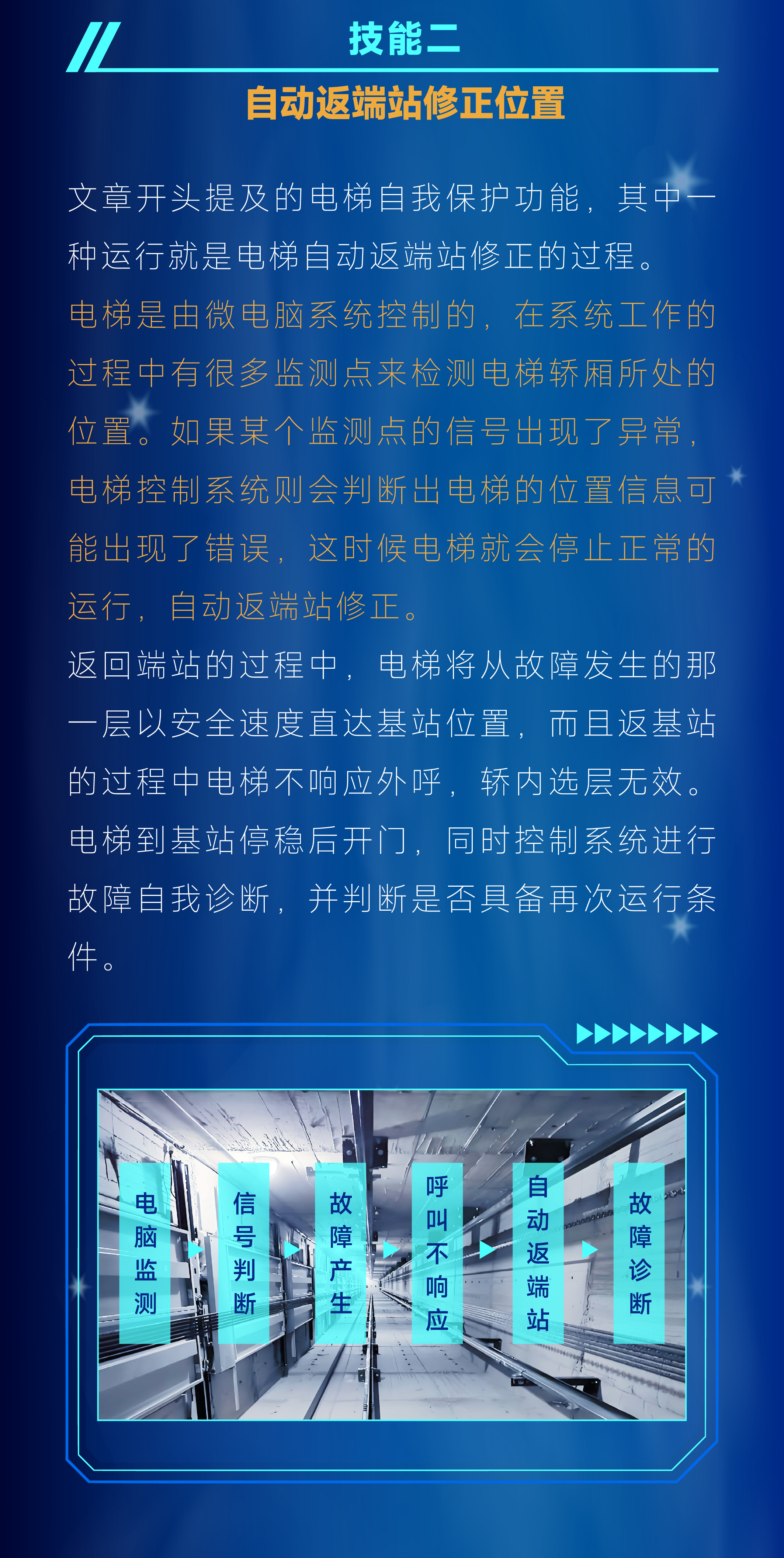
Automatic return-to-end-station position correction
The elevator self-protection function mentioned at the beginning of the article includes a process in which the elevator automatically returns to the terminal station for correction. The elevator is controlled by a microcomputer system, and during its operation, numerous monitoring points are used to detect the exact position of the elevator car. If a signal from one of these monitoring points shows an anomaly, the elevator control system will determine that there may be an error in the elevator’s position information. At this point, the elevator will halt its normal operation and automatically return to the terminal station for correction.
During the return trip to the base station, the elevator will travel directly from the floor where the fault occurred to the base station at a safe speed. During this return journey, the elevator will not respond to external call requests, and any floor selections made inside the car will be invalid. Once the elevator has safely stopped at the base station and the doors have opened, the control system will perform a self-diagnosis of the fault and determine whether the conditions for resuming operation have been met.
When the target-floor door fails to open, the elevator will automatically switch to the adjacent floor and stop there.
When the elevator, due to mechanical jams or other obstructions, cannot fully open the landing doors within the scheduled time, a safety protection mechanism will be automatically activated. At this point, the elevator will automatically move to the adjacent floor and open its doors to release the passengers.
This process is designed to ensure passenger safety and prevent inconvenience caused by elevator doors failing to open normally for an extended period of time.
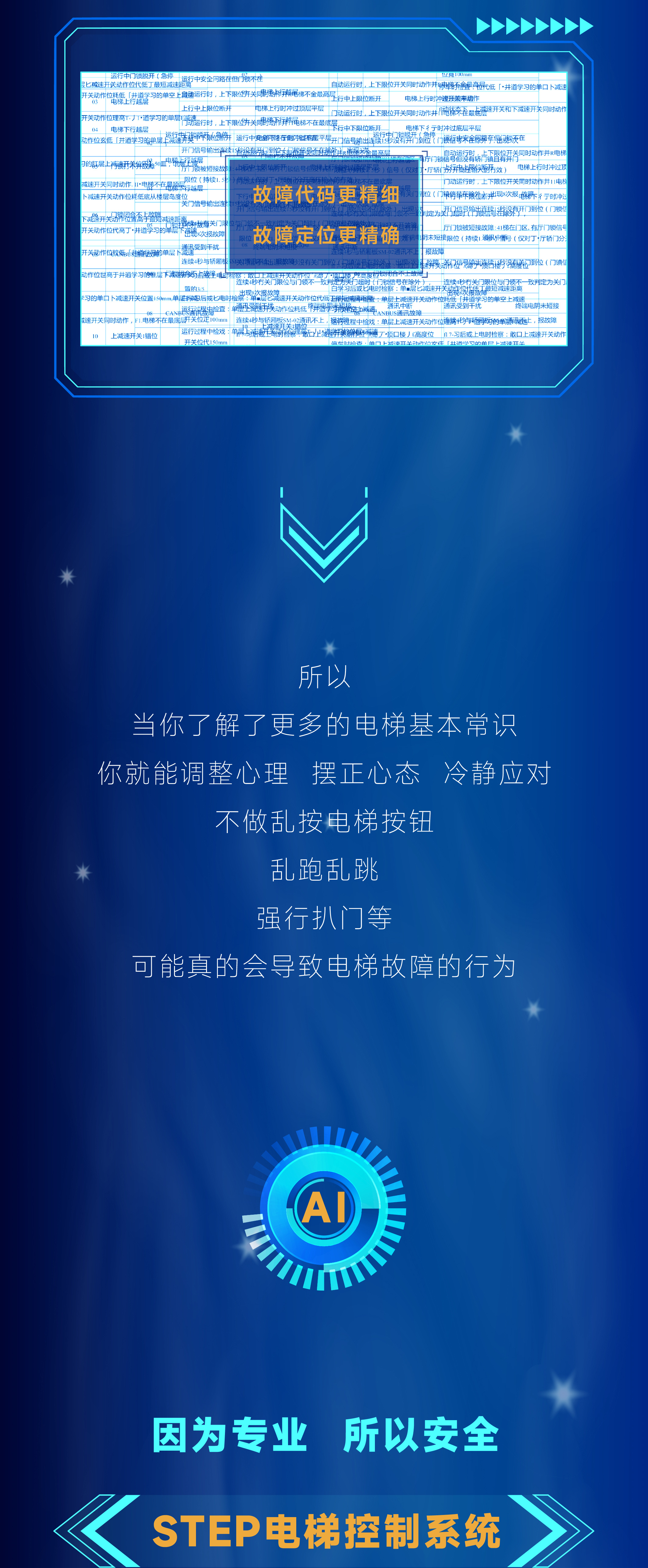
The fault code precisely locates the source of the malfunction.
The basic principle behind fault codes is that the elevator’s sensors and control system detect and record various behaviors and states of the elevator. When a fault occurs, the control system intelligently identifies the source of the fault based on the collected signals and the elevator’s operational status, and generates a corresponding fault code. This helps maintenance personnel quickly understand the specific details of the elevator malfunction, take effective measures, and better maintain and repair the elevator.
So, once you’ve learned more about the basic common sense related to elevators, you’ll be able to adjust your mindset, maintain a positive attitude, and calmly handle situations without engaging in behaviors—such as randomly pressing elevator buttons, running around or jumping wildly, or forcibly prying open the doors—that could actually lead to elevator malfunctions.




Contact Us
Email:
market@stepelectric.com
Address:
No. 1560, Siyi Road, Jiading District, Shanghai Municipality