
How can we reduce the energy consumption of internal mixers in rubber production?
2024-09-24

With the rapid development of the global automotive industry, tires—key components in automobiles—are also experiencing rapid advancement. In rubber-producing enterprises, where tires are a major product, rubber compounding is the primary process responsible for significant energy consumption and the emission of pollutants.
Rubber compounding refers to the process in tire manufacturing during which rubber, carbon black, oils, vulcanizing agents, and other additives are thoroughly mixed using a #closed-drum mixer# to produce a rubber compound with specific properties. Under the influence of mechanical, thermal, and chemical factors, the rubber temporarily loses its elasticity and becomes more plastic, thereby meeting the various processing requirements throughout the manufacturing process.
Take the production of radial tires as an example: A company that consumes 60,000 tons of raw rubber annually can have annual electricity consumption reaching 130 million kWh. Among this, electricity used for rubber compounding accounts for one-third, with most of it consumed by internal mixers. Therefore, reducing the energy consumption of internal mixer equipment has become a top priority for every tire manufacturer.
So, how can we achieve energy savings and reduce consumption in internal mixers? This can be done by optimizing the variable-frequency drives and motors.
(1) Frequency converters help reduce energy consumption | ME800 High-Voltage Frequency Converter
The new-generation series-connected internal mixer, developed in collaboration with Dalian Rubber & Plastics Machinery Co., Ltd., adopts a semi-direct-drive drive mode, effectively reducing the mixer’s energy consumption. It has been successfully implemented at a well-known tire manufacturer in Anhui Province. The series-connected internal mixer replaces the traditional single-action mixing method with a combined-action approach, rationally arranging the two process stages—temperature-rise mixing and constant-temperature reaction—across two workstations of different volumes (namely, the upper internal mixer and the lower internal mixer).
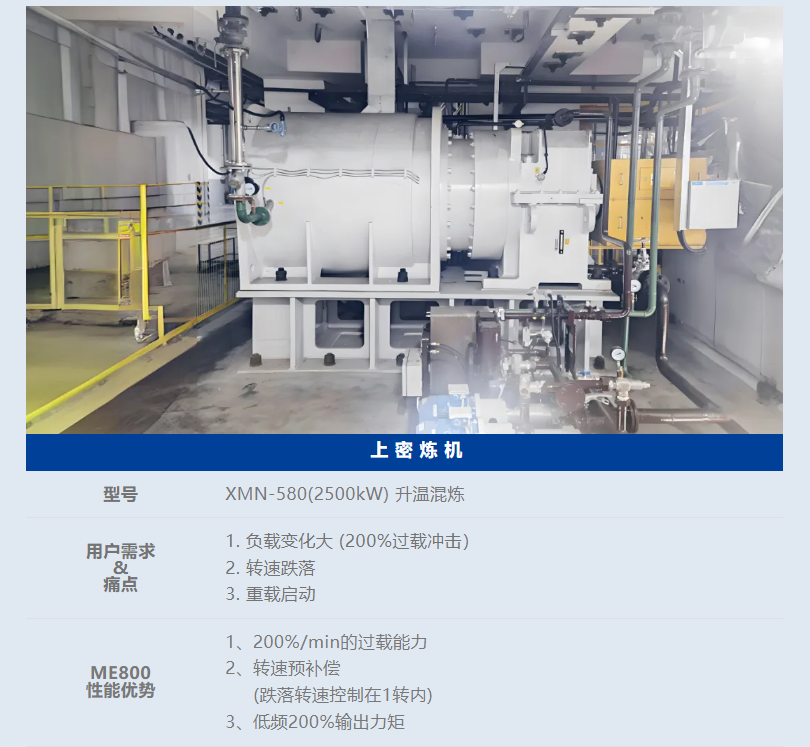
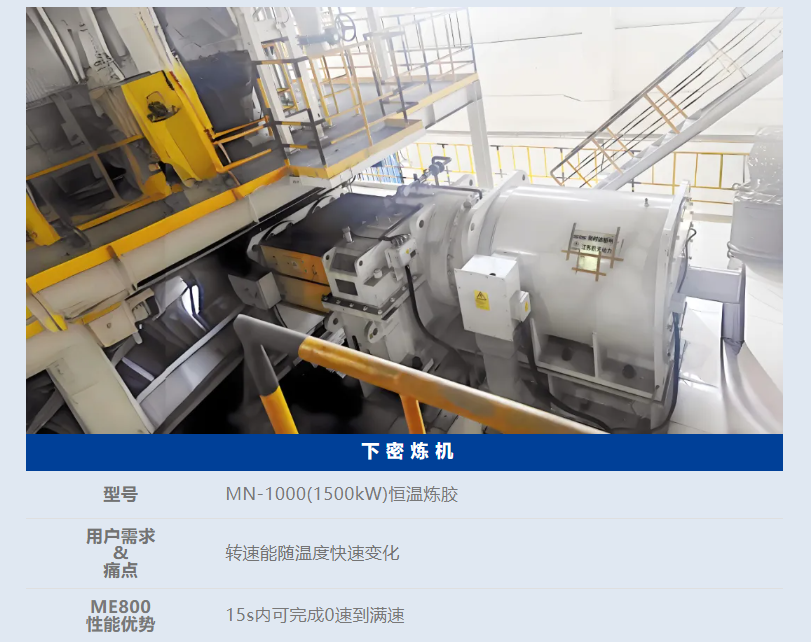
(2) Motor assistance reduces energy consumption | Permanent-magnet semi-direct-drive motor
Currently, the conventional configuration for internal mixers in the tire industry typically involves driving the mixer with either a DC motor or an induction motor, combined with a three-stage reduction gearbox. However, this setup not only results in bulky equipment but also increases costs and complicates subsequent maintenance due to the extensive use of high-priced gear oils in the multi-stage reduction gearbox. Moreover, it poses significant environmental challenges. In contrast, adopting a permanent-magnet semi-direct-drive system can effectively address these issues, enabling a more efficient, environmentally friendly, and cost-effective operational solution.
Advantages of the permanent magnet semi-direct drive system:
1. Uses a single-stage planetary reduction gear, reducing the size by 30%.
2. No additional gearbox oil pump system required; maintenance-free operation.
3. The reduction mechanism is simple, and its efficiency is 10% higher than that of the “asynchronous motor + reducer” configuration.
(3) The powerful synergy between the inverter and the motor
We have already learned that the permanent-magnet semi-direct-drive system offers advantages in terms of improved efficiency, reduced losses, and enhanced controllability. When the ME800 is paired with a permanent-magnet synchronous motor, these advantages are further amplified.
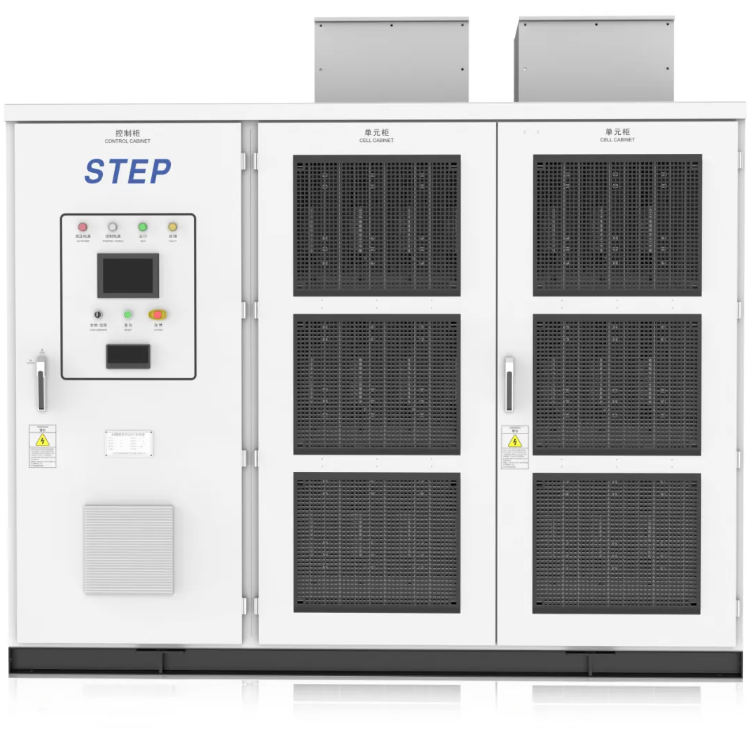
(4) Advantages of the ME800 Inverter + Permanent Magnet Synchronous Motor
▋ The high-efficiency ME800 features an adaptive energy-saving algorithm that automatically adjusts torque output based on changes in load and speed, enabling more efficient operation of permanent magnet synchronous motors.
▋ High control accuracy: Thanks to the magnetic field generated by the rotor of the permanent magnet motor, the ME800 can precisely identify the electrical angle at startup, ensuring smooth load-carrying start-up of the permanent magnet synchronous motor.
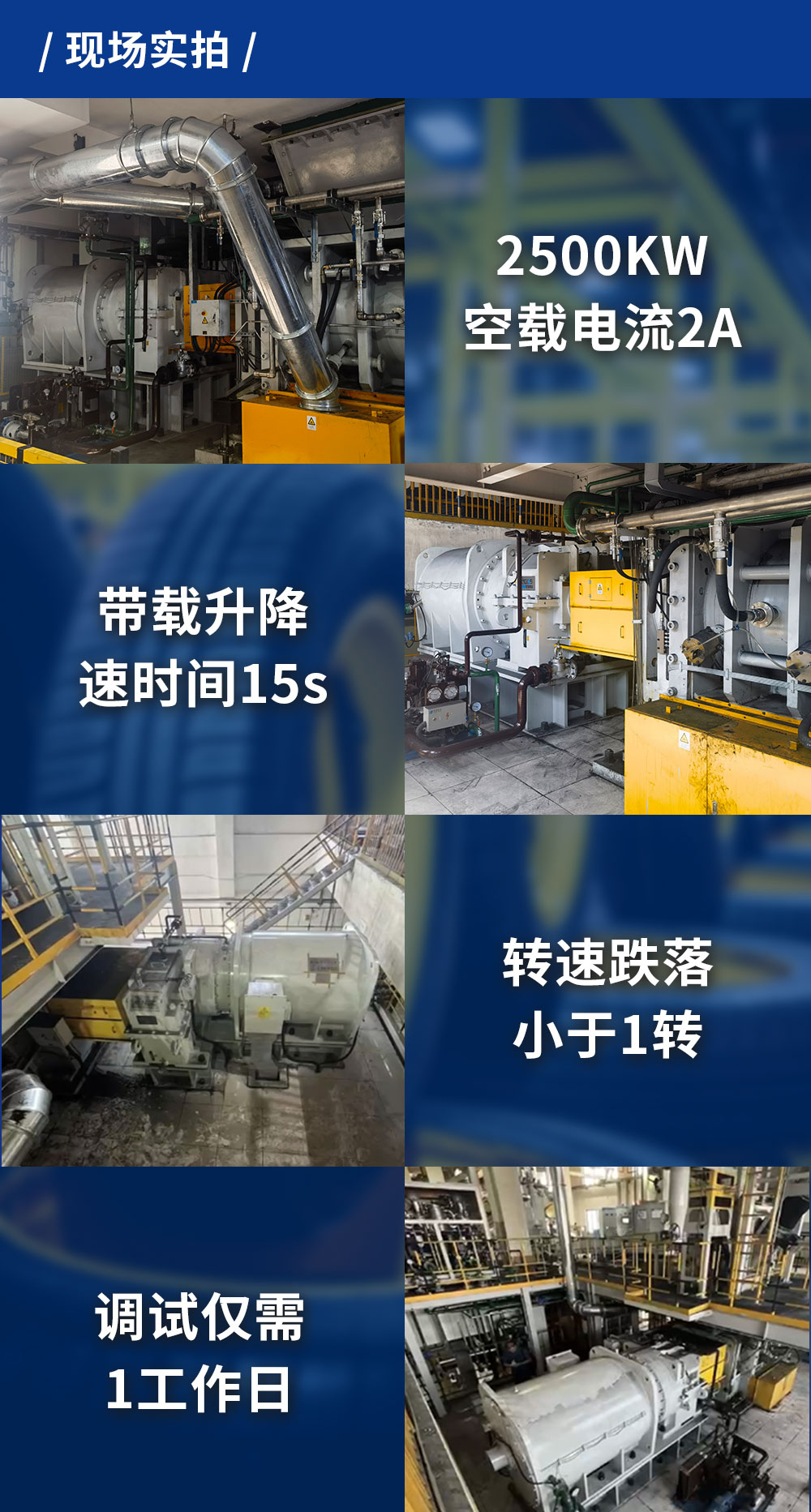
▋ Speed drop pre-processing, coupled with sudden load increases during operation, both require highly precise control algorithms. This solution can rapidly compensate for speed fluctuations caused by abrupt load changes, ensuring stable operating speed.
▋ The low-noise ME800 adopts a 9-unit structure and variable carrier technology, enabling precise control of output voltage harmonics and reducing electromagnetic noise in the motor.
▋ The constant-temperature rubber mixing process: The high-speed ME800 can quickly respond to temperature changes in the internal mixer and adjust the rotation speed accordingly.
▋ The easily adjustable redundant fuzzy control has been implemented for the permanent magnet synchronous motor model, making it insensitive to motor design parameters and facilitating convenient tuning.
The successful application of STEP ME800 in permanent-magnet semi-direct-drive systems has opened up a new path for energy conservation and efficiency enhancement in the tire industry. We believe this technology will see even wider adoption across the industry, helping companies further improve product quality and production efficiency.

Contact Us
Email:
market@stepelectric.com
Address:
No. 1560, Siyi Road, Jiading District, Shanghai Municipality