
“Smart elevators” have become market favorites—just how much cutting-edge technology do they actually contain?
2022-03-01

With the rapid development of technologies such as cloud computing, the Internet of Things, and artificial intelligence, “smart elevators” have been widely discussed in recent years. Shanghai has put forward requirements for smart elevator monitoring terminal technology and related platform functionalities; Chongqing has introduced a safety evaluation scheme for smart elevator systems; and Wuxi has released technical specifications for smart elevator IoT systems. An increasing number of stakeholders—including local regulatory agencies, elevator manufacturers, and elevator users—are paying close attention to smart elevators. As a leading manufacturer of elevator components, STEP, drawing on years of technological research and practical experience, has launched an elevator cloud solution that can accelerate the development of smart elevators and play a vital role in building a safe and healthy elevator ecosystem.
1. Enhance the quality of safe elevator operation and ensure passenger safety when riding elevators.
Smart elevators should be capable of monitoring elevator operations and, first and foremost, providing real-time alerts. At the same time, databases should be established to record the rated number of operating cycles and service life of elevator components. By integrating data on elevator operation, vibration, and other relevant factors, a predictive mechanism for identifying potential safety hazards should be developed, enabling proactive warnings. Furthermore, smart elevators should support full-lifecycle management of components, with component certification and binding allowing their associated data to be recorded on a cloud platform.
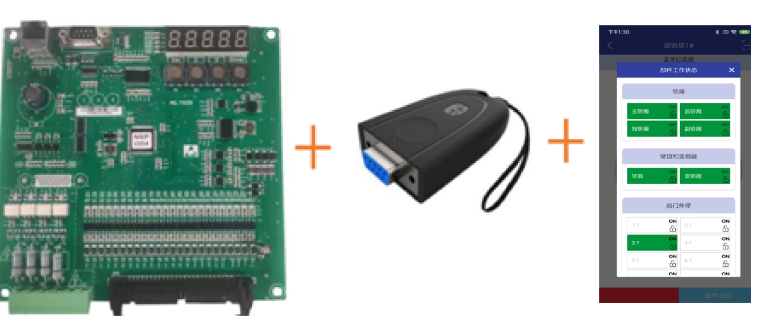
☆ The accessory certification feature of STEP Elevator Cloud enables effective management of elevator accessories, ensuring their quality and reliable sourcing.

☆ The Elevator Operation Characteristic Diagnostic Device (EOCD), in conjunction with the elevator cloud terminal and the elevator cloud platform, can establish an elevator operation database and use cloud-platform algorithms to provide early warnings of potential elevator safety hazards.
2 Creating convenience for property management
Smart elevators should enable property management companies to gain comprehensive insights into elevator operation data and maintenance status, thereby ensuring safe elevator operations for residents. They should also help property management companies build a strong service reputation and reduce passenger complaint rates. Furthermore, these smart elevators should provide data on elevator health assessments, offering crucial support for property management companies and insurance providers in smoothly concluding insurance contracts. The STEPeng Elevator Cloud can guarantee the safe and reliable operation of elevators while generating compelling data that ensures low or even zero failure rates, ultimately enhancing the overall quality of property services.
3 To reduce the difficulty of supervision for the Quality Supervision Bureau.
Smart elevators should help the Quality Supervision Bureau enhance the speed and accuracy of elevator data traceability, ensuring that responsibility determinations are backed by solid data. At the same time, smart elevators should strive to create pristine operating conditions for elevators, thereby reducing the supervision challenges faced by the Quality Supervision Bureau. The STEP Elevator Cloud effectively monitors the safe operation of elevators and generates valuable operational data, providing crucial support for the Quality Supervision Bureau’s data traceability efforts. Component certification helps ensure optimal operating conditions for elevators, preventing substandard components from contaminating the system. Additionally, the EOCD technology can significantly reduce elevator failure rates, thus maximizing prevention of serious accidents such as personal injuries and fatalities.
4. Improve the timeliness of elevator maintenance and repair services, and enhance the quality of maintenance and repair work.
Smart elevators should be able to accurately collect elevator operation data and promptly assess the “health status” of the elevator. Leveraging expert analysis technologies on a cloud platform, maintenance projects and component replacement strategies can be precisely scheduled, thereby enhancing the quality and efficiency of each maintenance service. The EOCD of STEP Elevator Cloud and the elevator cloud terminal can effectively acquire elevator operation data and use cloud computing technology to determine the elevator’s health status, bringing convenience to elevator maintenance. The component certification feature helps establish component replacement strategies, enabling efficient maintenance operations.
5. Enhance user experience and serve users’ lives.
Smart elevators should genuinely enhance the user experience. While AI technology has already been applied in the elevator industry, there is still room for improvement in terms of truly serving users’ daily lives. Smart elevators could consider providing users with door-to-door services—for example, linking elevator interactions with smart home systems or deploying robots to pick up household waste directly at users’ homes.
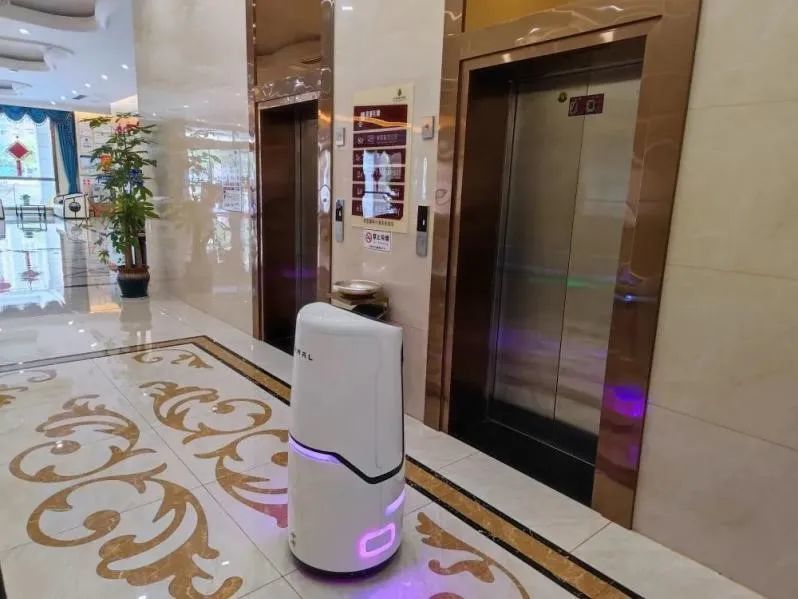
☆ The STEP Amal Robot seamlessly integrates with elevators, enabling coordinated operation of multiple robots and efficient scheduling of multiple elevators. By combining elevator cloud terminals with platform technologies, the application scenarios for Amal robots will gradually expand.
6. Accurately identify trapped individuals to ensure rapid rescue.
Accurately determining when people are trapped in an elevator is a challenging task. It requires considering scenarios such as elevator power failures and situations where no dynamic input is available—such as when a person has fainted—and also taking into account the trade-off between cost and performance. As a prerequisite for accurately identifying elevator malfunctions that lead to elevator stoppages, it’s essential to comprehensively evaluate the strengths and weaknesses of technologies such as AI, infrared sensing, and millimeter-wave sensing, and to provide the most cost-effective solution.
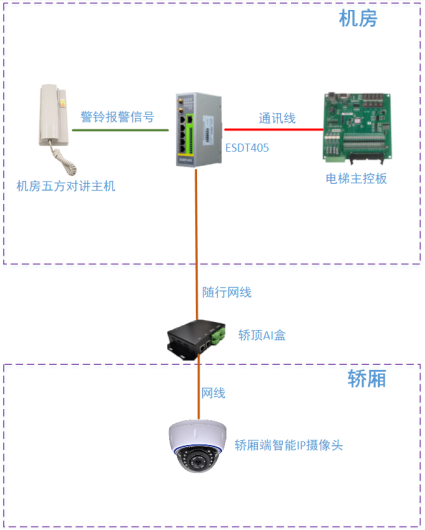
☆ STEP Elevator Cloud is about to launch a smart AI system that will prioritize features such as passenger counting, electric vehicle detection, door obstruction detection, human presence detection, detection of individuals carrying tempered glass bottles, and detection of fainting incidents. As for features like door-pulling, jumping, impact against elevator walls, smoke detection, and open-flame detection, the research is now in the final sprint phase.
7 Blockchain technology for secure data sharing
The entire lifecycle of an elevator generates vast amounts of data, and the sharing of this data among different stakeholders as well as ensuring data trustworthiness are critical issues that the elevator industry should address. Blockchain systems—characterized by decentralization, immutability, and traceability—can facilitate trustworthy management of elevator lifecycle data, distributed secure data storage, and precise control over data access permissions, thereby providing robust security guarantees for building a comprehensive elevator ecosystem. STEP Elevator Cloud employs military-grade blockchain encryption technology with digital currency-level security, ensuring that encrypted data remains tamper-proof and cannot be intercepted during transmission.

Contact Us
Email:
market@stepelectric.com
Address:
No. 1560, Siyi Road, Jiading District, Shanghai Municipality