
In-depth Coverage | STEP Robots Devote 100% to Pipe Fitting Processing
2019-12-18

Zhejiang Hailiang leverages STEP robots for automated loading and unloading, strengthening its competitive advantages and achieving industry leadership.
Second stop on our visit: The Copper Pipe Fittings Division of Zhejiang Hailiang Co., Ltd.
STEP Robot Workstation: Loading and Unloading on Pipe Fitting Processing Machine
STEP Robot model quantity: SA1400, 9 units
Robot deployment start date: November 2016
Workpiece: Brass fittings
Withstand the test of prolonged, high-intensity use.
At 100% speed, with 20 hours of intensive daily use, In the machining workshop, where metal chips fly everywhere, the indoor temperature remains consistently at 40 degrees Celsius during summer. After three consecutive years of continuous use, the robot bodies themselves are operating normally, and the tooling fixtures are functioning properly. For every six robots deployed, five production-line workers can be eliminated—such results are exactly what many manufacturing companies have long dreamed of achieving. This is precisely the outcome achieved by Hailiang Group through the adoption of STEP robots for automated loading and unloading operations.

Hailiang Machining Workshop
Zhejiang Hailiang Group is a well-known enterprise that has made it onto the Fortune Global 500 list. With 15 production bases located in Asia, the Americas, and Europe, the company is a benchmark and industry leader in the global copper tube and rod processing sector. Brass and red copper fittings are among its key products. Due to the large number of machine tools on-site, high noise levels, abundant copper chips, and high summer room temperatures, it has become increasingly difficult to recruit workers. In 2016, in order to seize new growth opportunities and address the worsening labor shortage, Hailiang Group decided to step up its investment in automation in traditional manufacturing processes. To this end, the company purchased nine STEP STEP SA1400 robots to automate the loading and unloading operations in its copper fitting workshop. STEP provided the entire robotic cell on a “turnkey” basis.
A brand that’s easy to use—repeated purchases are the best proof.
On November 13, three years later—in early winter—there was no time to admire the lush, verdant beauty of the misty Jiangnan region aboard the high-speed train. All along the way, I couldn’t help but think about the nine robots that had already been working at Hailiang Group for three years. Having stood the test of time, enduring the rigors of heavy-duty, harsh-environment machine-tool loading and unloading tasks, how had the STEP robots performed? Had they won the approval of their employer?
With a heart full of apprehension, I arrived at the Hailiang factory in Zhuji. In the copper pipe fittings machining workshop, I saw my long-lost robotic colleagues still busily wielding their grippers, moving nimbly among the tightly packed machine tools—lifting and lowering parts with remarkable order and efficiency—only then did I feel slightly relieved. Walking through the narrow passageways where there was barely enough room to turn around, I occasionally passed workers loading materials or inspecting parts with dial calipers. The deafening roar of the machine tools filled my ears, and the robot arms and grippers before me were covered with copper chips. I felt both delighted that the robots had proven capable of thriving in such an environment rife with flying metal shavings, and deeply gratified that they had finally freed human workers from such harsh conditions.
November 2019, on-site video
Engineer Bian, a field engineer at the copper pipe fittings processing workshop, had already been working at Hailiang for many years by the time STEP Robotics delivered its robots. Recalling the days before automation was implemented, he described how each worker had to monitor three machine tools simultaneously, bustling around like spinning tops. In summer, with equipment overheating and the high ambient temperature, copper chips accumulated rapidly, and since fans couldn't be used, the workshop often remained above 40 degrees Celsius. As a result, work efficiency plummeted, and it became common for orders to fail to be delivered on time.
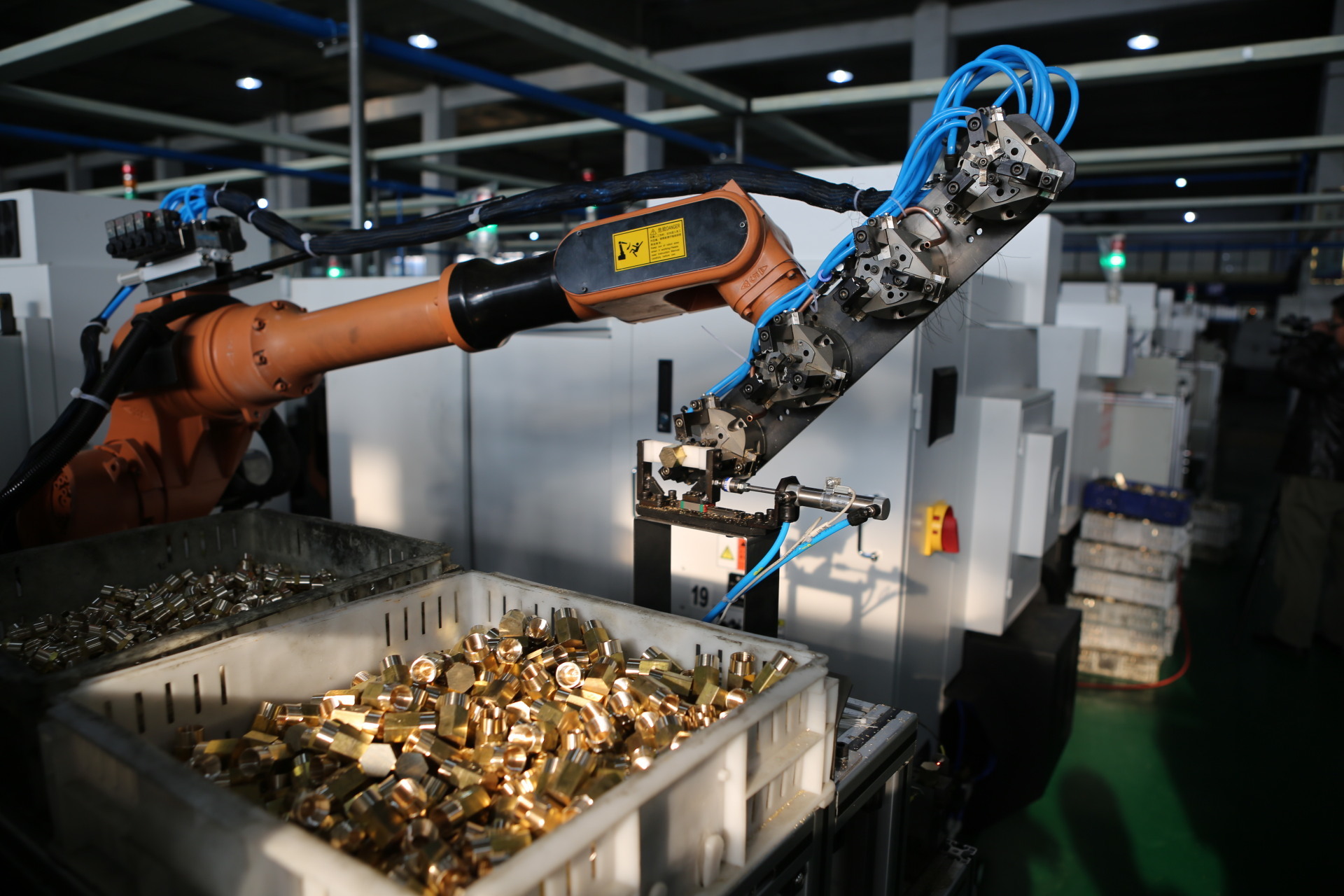
Busy robot
Since the installation of STEP robots was completed, training sessions for Hailiang employees were promptly organized. Today, Hailiang’s employees are fully capable of working independently, operating the robots on their own, and performing routine maintenance and upkeep tasks. As a result, the number of workers has decreased, machine utilization has improved, and the company’s competitiveness has been significantly enhanced. Thanks to STEP excellent performance, which has further strengthened Hailiang’s advantages, Hailiang subsequently went on to purchase several more STEP robots in succession.
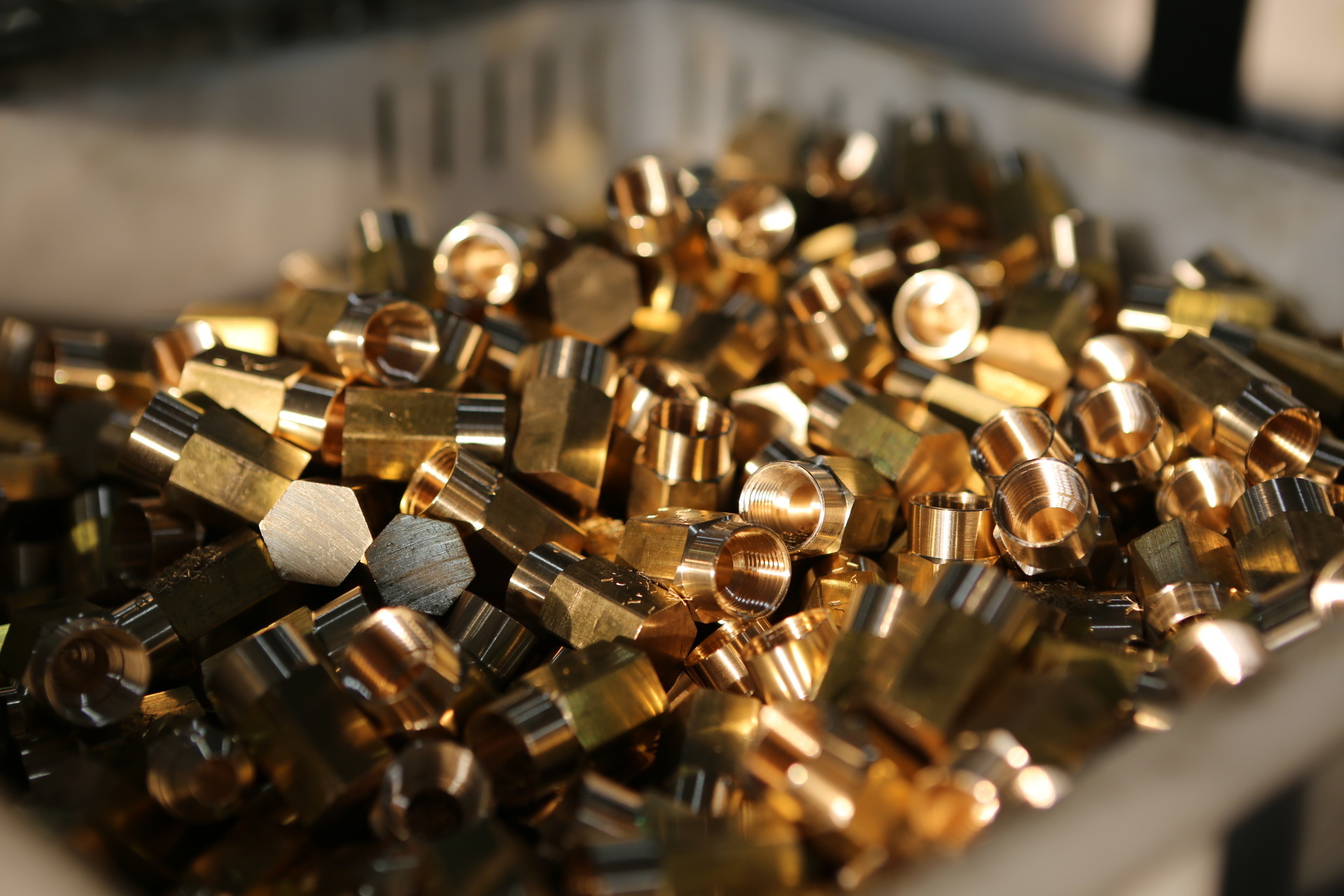
Brass fittings
Hailiang Group, founded in 1989, is a prime example of how Chinese private enterprises have grown from small beginnings to become strong and influential. In 2018, the group achieved an operating revenue of 173.6 billion yuan and ranked 473rd among the world’s top 500 companies, 115th among China’s top 500 enterprises, 25th among China’s top 500 private enterprises, and 5th among Zhejiang’s top 100 enterprises. Its subsidiary, Hailiang Education Group, is the first basic education group in China to be listed on the U.S. stock market and serves as a benchmark for private basic education in China. Hailiang Shares operates 15 production bases across Asia, the Americas, and Europe, and is a leading global enterprise in the copper tube and rod processing industry.

Contact Us
Email:
market@stepelectric.com
Address:
No. 1560, Siyi Road, Jiading District, Shanghai Municipality